Creamy Lasagna Soup — Decide About the Pasta Before You Start, Not After
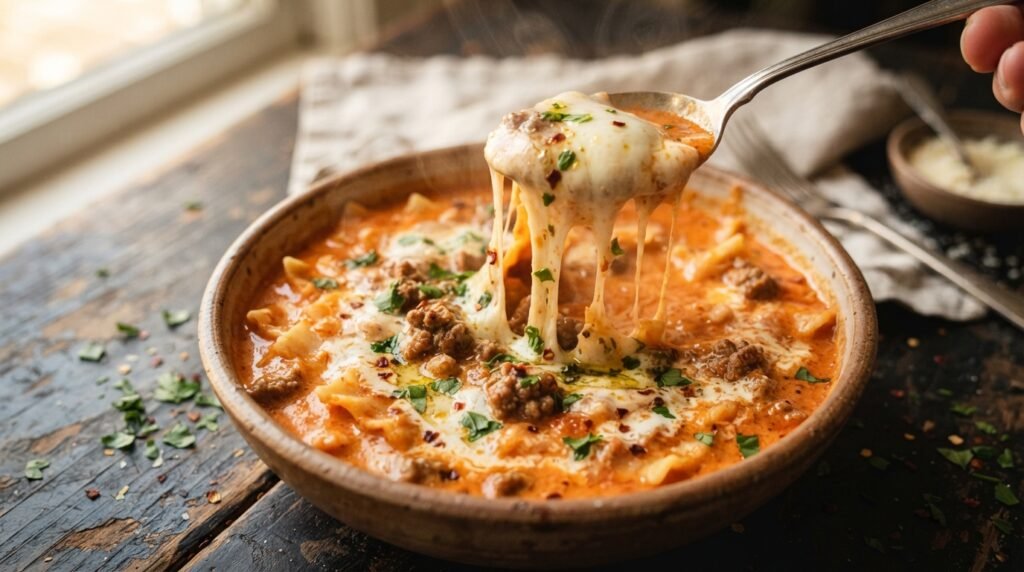
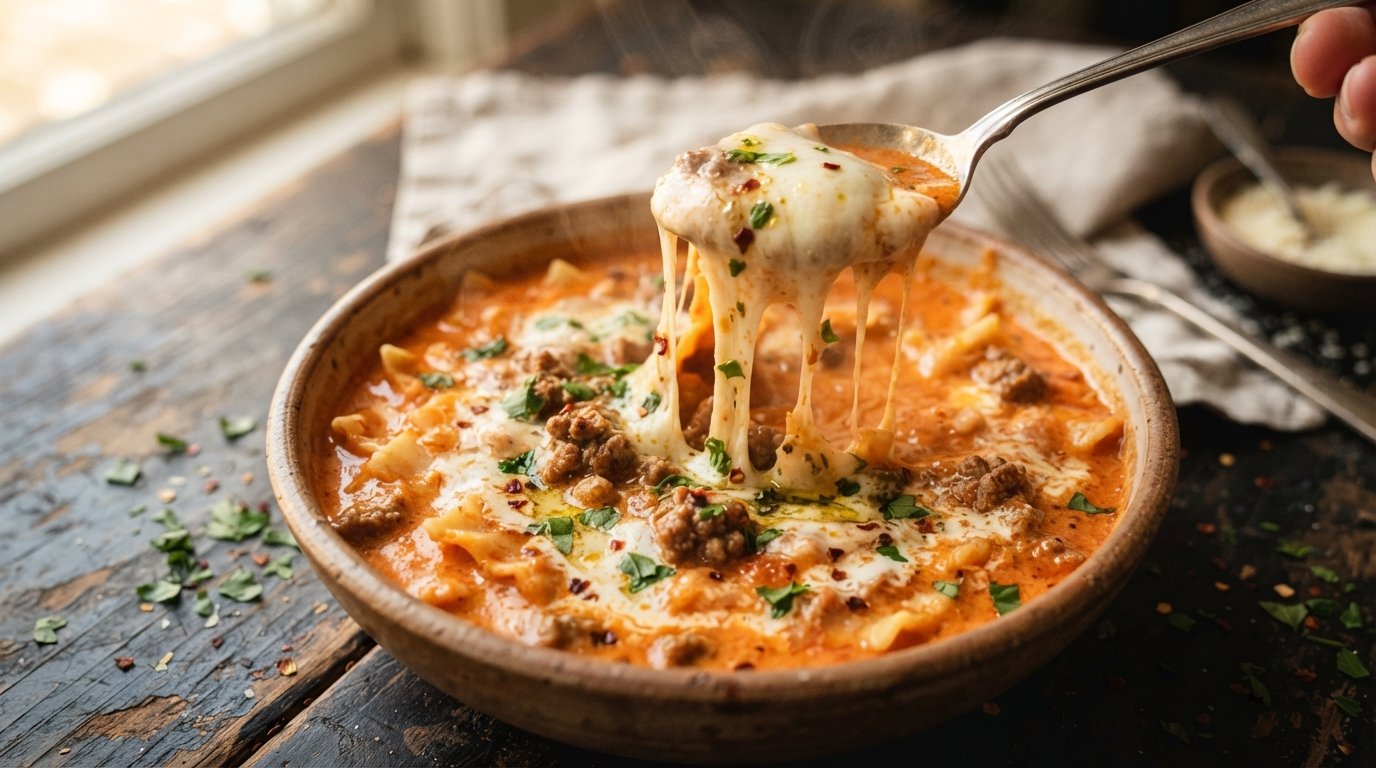
Creamy lasagna soup is everything you want from a lasagna with none of the layering: beef, passata, broken lasagne sheets, and a swirl of cream, finished with molten mozzarella. Half an hour, one pot.
There’s one decision to make, and you have to make it before you start cooking, not when you’re staring at the leftovers.
Are you eating all of this today?
If yes, cook the pasta in the soup and enjoy the best version of this dish there is. If no — and there’s a lot of soup here — cook the pasta separately, or tomorrow you’ll open the fridge to find a solid orange brick where your dinner used to be.
That’s not a storage tip. It’s the fork the whole recipe hangs on, and the version going around doesn’t mention it at all.
The 40-Second Answer
Creamy lasagna soup is made by browning beef with onion and garlic, simmering it in broth and passata with tomato purée and herbs, and cooking broken lasagne sheets in the liquid before finishing with cream and mozzarella. Cook the pasta separately if you want leftovers — pasta left in soup keeps absorbing liquid and turns mushy.
Key Takeaways
- Decide about the pasta first. Same-day: cook it in. Leftovers: cook it separately.
- Break the sheets. Whole lasagne sheets in a bowl of soup are a serving problem, not a rustic charm.
- “One packet” is not a measurement. Weigh it. This is the one ingredient that can wreck the dish.
- Add roughly an extra cup of liquid if the pasta cooks in the pot. It’s going to drink.
- Cream goes in at the end, off the heat. Cream plus hot acidic tomato is the one real risk here.
- Mozzarella in the bowl, not the pot.
The Pasta Problem — Read This Before You Shop
Here’s the thing about pasta that everybody knows and nobody applies: it doesn’t stop absorbing when you stop cooking it.
<cite index=”105-1″>All pasta does this, because the rehydration process doesn’t halt when you take it off the heat.</cite> In a bowl you’d never notice — you eat it and it’s gone. In a pot of soup sitting in the fridge overnight, it has twelve hours and a litre of liquid to work with. It takes both.
The people who’ve made this dish most are unanimous. The recipe that claims to be the original lasagna soup on the internet puts it bluntly: <cite index=”106-1″>store the soup, the cooked pasta and the cheese separately — don’t combine the soup and pasta, because the noodles will absorb most of the broth and go soft and mushy.</cite> Its author is direct about why she does it: <cite index=”106-1″>”I prefer to cook the pasta separately and add it to individual bowls, because I am not a fan of mushy noodles. Plus the soup reheats much better.”</cite>
Another long-standing recipe reaches the same place from experience rather than theory: <cite index=”110-1″>”I like to cook pasta separately and add it to individual servings, then reserve the remaining noodles for leftovers separately. We don’t finish the whole pot in one sitting and I hate soggy pasta.”</cite> A third simply says <cite index=”109-1″>the noodles tend to be a bit mushier when stored together.</cite>
Three independent recipe developers, one conclusion, arrived at the hard way.
And here’s the part that makes it worse for this particular recipe: you’re using lasagne sheets. Sheets are the fragile end of the pasta spectrum. <cite index=”108-1″>Sturdy shapes like bowtie, penne, rigatoni or macaroni hold their texture best, especially for leftovers</cite> — whereas <cite index=”108-1″>lasagne noodles soften more as the soup sits, so they’re best enjoyed the same day or added closer to serving time.</cite>
So the source recipe pairs the most absorbent format with a soup you cannot possibly finish in one sitting, and says nothing.
The Fork: Which Version Are You Making?
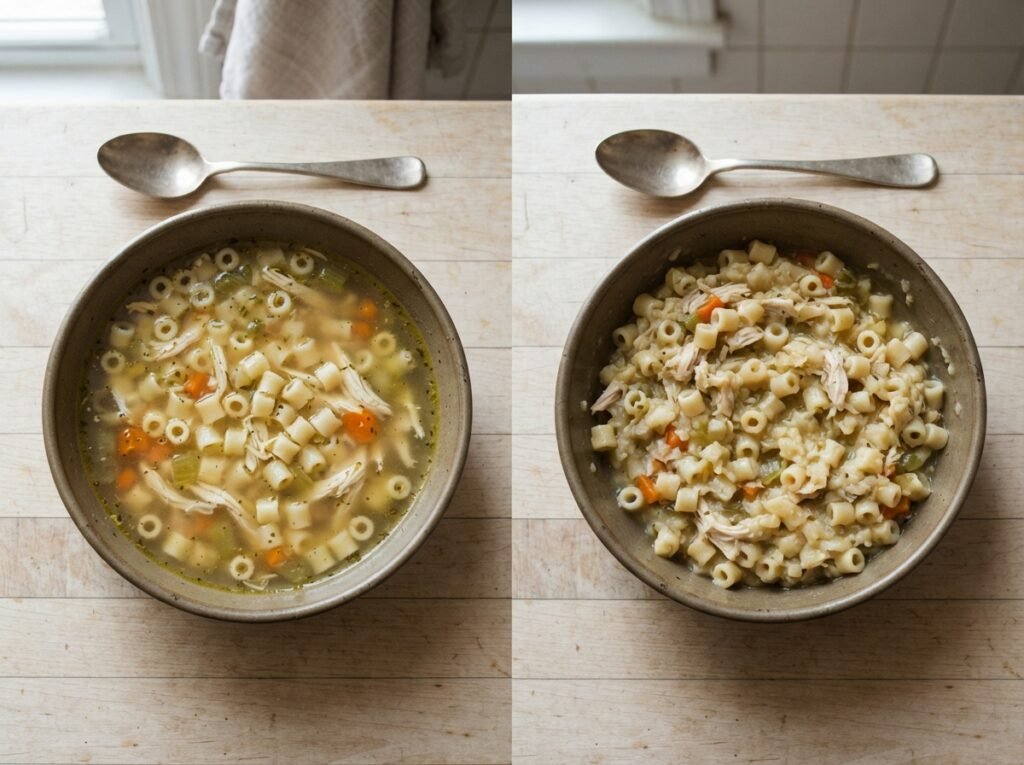
Same-day version — cook the pasta in the soup. This is genuinely the better bowl. The pasta cooks in tomato and broth rather than water, and it comes out tasting of the soup instead of tasting of pasta. One person who boils her noodles in the soup on purpose says exactly that: <cite index=”105-1″>”I actually boil my noodles in the soup so it does absorb the broth for flavour.”</cite> If four people are sitting down now, do this.
Leftovers version — cook the pasta separately. Boil it in salted water, drain it, and add it to individual bowls with the soup ladled over. Store the two apart. <cite index=”110-1″>Toss the reserved noodles with a little oil so they don’t stick.</cite> <cite index=”106-1″>Drizzle a little olive oil over the drained pasta and fold gently to coat.</cite> Then <cite index=”106-1″>reheat the soup in a saucepan over medium heat, stirring occasionally, and reheat the pasta separately — it needs less time, and heating it apart keeps it from absorbing all the broth.</cite>
And if you cook it in the pot, add more liquid than the recipe says. This is quantified and consistent: <cite index=”110-1″>add one extra cup of broth or water to make up for what the noodles will absorb — they’ll take about 12 to 14 minutes to cook in the soup.</cite> <cite index=”109-1″>Add about one extra cup of broth or water to make up the liquid the pasta will absorb; add the pasta when the soup comes to a boil and simmer 12–15 minutes, checking at 12.</cite>
Neither of those recipes started with a whole packet of lasagne sheets, which brings us to the ingredient list.
Ingredients
Serves 4–6
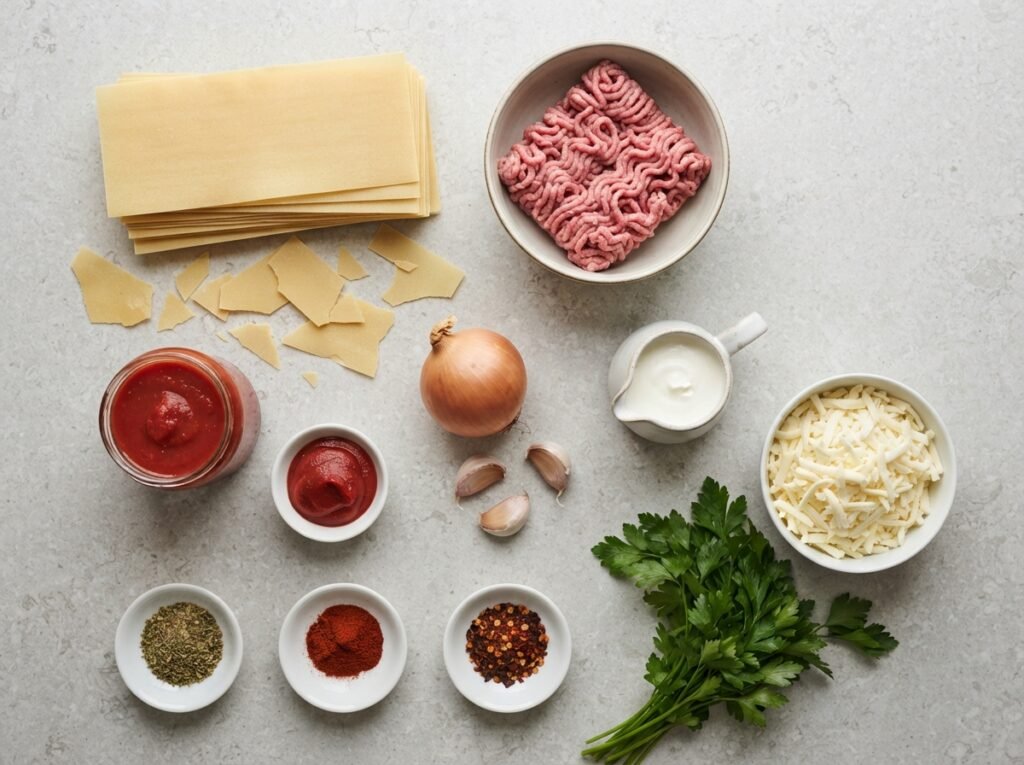
- 250g lasagne sheets, broken into pieces — see the note, this matters more than anything else here
- 500g beef mince
- 700ml vegetable broth (plus ~240ml more if the pasta cooks in the pot)
- 200ml cream
- 1 packet passata
- 3 tbsp tomato purée
- 1 onion
- 2 garlic cloves
- 50–100g grated mozzarella
- 1 bunch parsley
- Oil
- Oregano, salt, pepper, paprika
- Chilli flakes
The pasta line is the one to get right.
The original says “one packet,” and one packet is not a measurement. German packets of lasagne sheets run from 250g to 500g, and against 700ml of broth those two numbers describe completely different outcomes: a soup, or a very wet casserole. Weigh it. Start at 250g. You can always add more pasta to a thin soup; you cannot take pasta out of a thick one.
Break the sheets before they go in. <cite index=”108-1″>If you’d like to use lasagne noodles, break them into pieces before adding them to the pot.</cite> Whole sheets in a bowl of soup can’t be eaten with a spoon and can’t be ladled — you get one enormous flag of pasta and a lot of frustration. Snap them into rough two-inch pieces. The ragged edges are the whole aesthetic of this dish.
Swap them if you want leftovers. <cite index=”108-1″>Sturdy shapes like bowtie, macaroni, rigatoni or penne hold up best for leftovers and reheating.</cite> Mafalda — the ruffled ribbon — is the classic choice here because <cite index=”109-1″>the curly pasta looks a bit more like traditional lasagna</cite> while behaving better than a sheet.
Step 1: Build the Base
Dice the onion, mince the garlic. Soften the onion in oil, add the garlic for the last thirty seconds, then add the beef and brown it properly — hot pan, don’t crowd it, don’t stir it constantly. Let it catch colour.
Then the tomato purée. Fry it for a minute or two before anything wet goes in, until it darkens a shade and stops smelling raw. Three tablespoons is a lot of concentrated tomato, and concentrated tomato tastes tinny until heat converts it. This is the biggest flavour lever in the recipe and it takes ninety seconds.
Then the passata, the broth, the oregano, paprika, salt, pepper and chilli flakes. Bring it to a simmer.
Simmer it for 15 minutes before the pasta goes anywhere near it. This is the pattern every good version follows — <cite index=”109-1″>add everything except the pasta, bring to a boil, reduce and simmer for 15 minutes</cite>, then deal with the pasta. The soup needs to taste like something before the pasta arrives, because once the starch is in there your seasoning window narrows fast.
Taste it now, properly, and adjust. Under-seasoned soup with pasta in it is very hard to rescue.
Step 2: The Pasta (Your Fork)
Same-day: add the broken sheets to the simmering soup along with the extra cup of liquid. Simmer 12–15 minutes, checking at 12. <cite index=”109-1″>If you cook them too long they’ll get mushy.</cite>
<cite index=”108-1″>Loosely cover, keep it at a steady simmer, and add small amounts of water or broth as needed — the pasta absorbs liquid and thickens the soup as it goes.</cite> Watch it and top it up. This is not a walk-away step.
Leftovers: boil the pasta separately in salted water to al dente, drain, oil, and hold it aside. It joins in the bowl, not in the pot.
Step 3: The Cream — At the End, Off the Heat
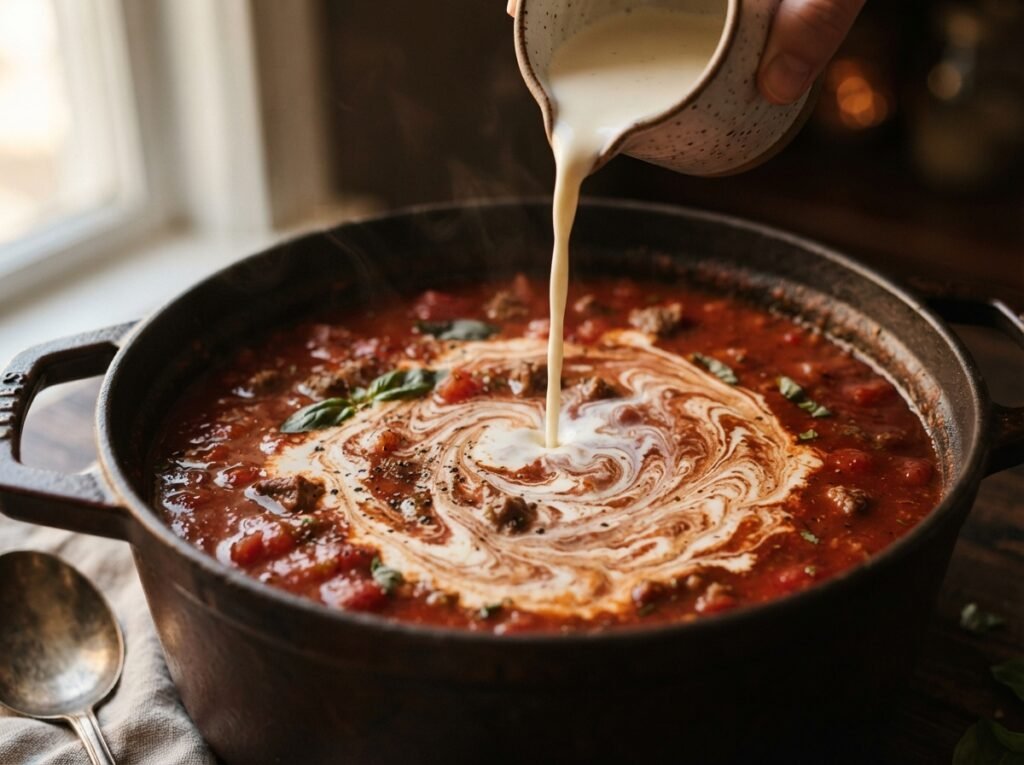
Take the pot off the heat. Let it settle for a moment. Then stir the cream through.
This is the one real technical risk in the recipe, and it exists precisely because this version is creamy. Cream is an emulsion held together by casein proteins, and those proteins do not enjoy meeting hot acid. <cite index=”43-1″>The proteins in cream are highly sensitive to sudden change — when they hit boiling acid their protective outer layers strip away almost instantly and they curdle.</cite> Passata and tomato purée are acid. A simmering pot is heat.
Two honest caveats, because I’m not going to oversell this. Higher-fat cream is fairly robust — <cite index=”45-1″>dairy with a higher fat percentage is much less likely to curdle over heat, and you could nearly boil it straight and it would mostly just thicken.</cite> And soup is dilute, which makes this far less risky than the same move in a concentrated pasta sauce. You will probably get away with dumping it in.
But the failure is terminal — <cite index=”43-1″>once a sauce has split, bringing it back to a proper emulsion is extremely difficult</cite> — and the fix costs nothing. Off the heat, stir it in, done.
If you want belt and braces, temper it: <cite index=”45-1″>don’t tip cold cream straight into the pot — warm it with a few spoonfuls of the hot soup first.</cite> Fifteen seconds.
Why this section doesn’t exist in any other lasagna soup article: because no other lasagna soup has cream in it. The entire English-language canon is brothy — broth, tomato, and a ricotta dollop on top. This German version is doing something different, and different means new failure modes. That’s the trade for a better soup.
Step 4: Cheese and Serve
Stir in the chopped parsley. Then the mozzarella — in the bowls, not the pot.
Ladle the soup, then add the grated mozzarella on top of each serving and let the heat of the soup melt it in. <cite index=”110-1″>The cheese melts well once stirred into the soup.</cite> The dollop-in-the-bowl approach is what the established recipes do, and there’s a version of the same logic on flexibility: <cite index=”108-1″>stir the cheeses directly into the pot, or add them to individual bowls for a more customisable option.</cite>
Bowl, not pot, for three reasons. Mozzarella in a pot stretches into ropes and welds to the base. In a bowl it melts into strands and pulls when you lift the spoon, which is the entire point of putting mozzarella on a lasagna soup. And if you’re storing leftovers, cheese that never went in the pot is cheese you can add fresh tomorrow — the original recipe stores it as a separate component for exactly this reason.
Chilli flakes at the table. They’re in the ingredient list and they should stay in your hand, not the pot. This is a rich, creamy, mild soup; some people want heat and some don’t, and it’s the one seasoning that’s better decided per bowl.
Storing It (The Bit That Matters Most Here)
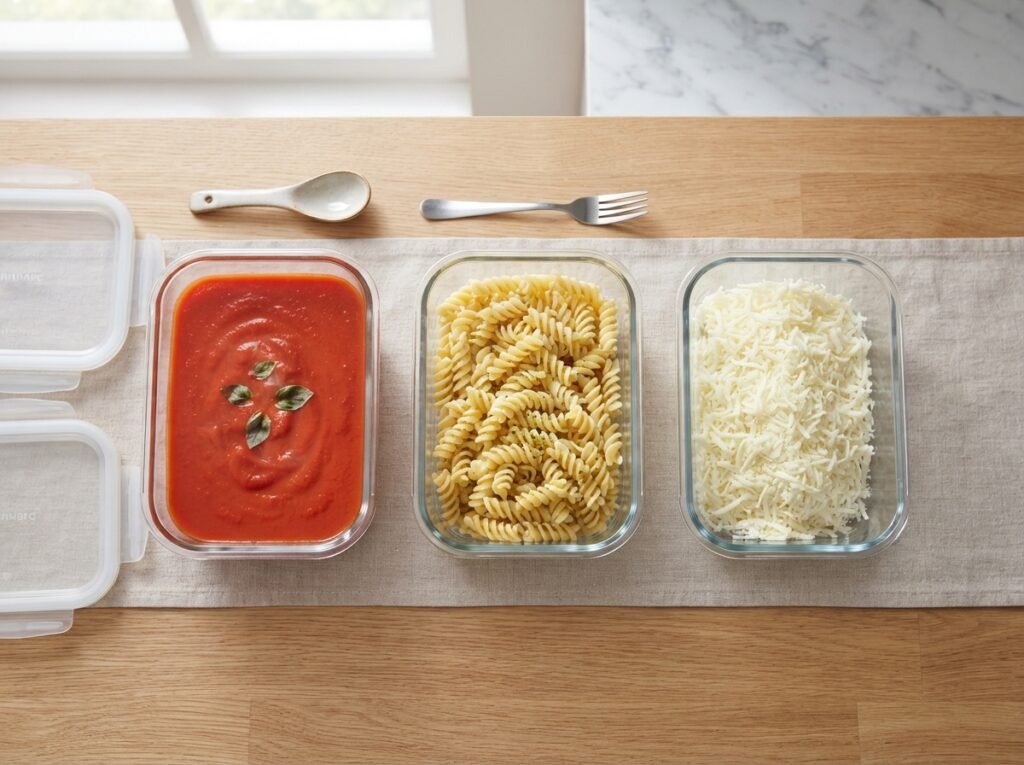
Three containers: soup, pasta, cheese. Not one.
<cite index=”108-1″>Let it cool completely, then refrigerate in an airtight container for up to 5 days. It freezes for up to 3 months, and for the best texture, freeze it without the cheese.</cite> <cite index=”109-1″>Store the pasta and soup separately in the freezer so the pasta doesn’t soak up the moisture.</cite> <cite index=”110-1″>The soup freezes well without the pasta or cheeses mixed in.</cite>
When you reheat, expect it to have thickened regardless: <cite index=”108-1″>add small amounts of broth or water as needed, since the pasta continues to absorb liquid even after the soup has cooled.</cite> <cite index=”109-1″>If you stored it all mixed together, you’ll want to add broth or water to thin it out.</cite>
One genuine upside worth knowing: <cite index=”106-1″>leftover lasagna soup is arguably even better, because the flavours have had more time to mingle.</cite> The soup improves. It’s only the pasta that suffers. Which is the whole argument for keeping them apart.
And a note on the cream if you’re freezing: dairy-based soups can separate on thawing. If you know in advance you’re freezing half, make the base and freeze it before the cream goes in, and add cream to each batch as you reheat it. Same principle as the pasta — keep the fragile component out until the last moment.
Who This Doesn’t Work For
- You want a light dinner. 500g of beef and 200ml of cream. It’s a comfort soup.
- You’re feeding one or two. This makes a lot. Halve it, or commit to the separate-pasta method from the start.
- You’re avoiding dairy. Cream and mozzarella are both structural to this version. The brothy American style would suit you better.
- You want to meal-prep it assembled. You can meal-prep every component. You cannot meal-prep the assembled bowl.
- You bought a 500g packet and want to use it all. Then buy more broth. Seriously — the liquid has to scale with the pasta or you’re making a bake.
Troubleshooting
“It turned into a solid block overnight.” The pasta drank the soup. It’s what pasta does. Thin it with broth to rescue this batch; cook the pasta separately next time.
“It thickened while I was still cooking it.” Normal. Top up with hot broth or water as you go. The pasta absorbs as it cooks and the recipe’s liquid doesn’t account for it.
“It went grainy after I added the cream.” Cream met hot acid. Off the heat next time, and temper it first.
“The pasta was mushy but the soup was fine.” Overcooked, or lasagne sheets sat too long. Check at 12 minutes, and switch to a sturdy shape if you’re not eating it immediately.
“The mozzarella went stringy and stuck to the pot.” It went in the pot. Bowls only.
“It tastes flat and slightly tinny.” Undercooked tomato purée. Fry it out properly next time — a full minute or two before anything wet goes in.
“I can’t eat it with a spoon.” You didn’t break the sheets.
The Verdict
Creamy lasagna soup earns its “best soup” billing. The cream is a genuine improvement on the brothy versions the English-speaking internet has settled on — richer, rounder, and it softens the acidity of all that tomato without needing a ricotta dollop to do the job.
But it hands you a dish with a built-in trap, and the recipe circulating walks you straight into it: a whole packet of the most absorbent pasta there is, in a soup you can’t finish in one sitting, with no warning and no extra liquid.
So decide first. Eating it now? Cook it in, and it’s the better bowl. Eating it tomorrow? Pasta separately, three containers, and tomorrow’s is arguably better than tonight’s.
Weigh the pasta. Break the sheets. Cream off the heat. Cheese in the bowl.
7. FAQ
Can you cook the pasta in lasagna soup?
Yes, and it tastes better that way, since the pasta cooks in tomato and broth rather than plain water. But only do it if you’re eating the whole pot in one sitting. Add about an extra cup of broth or water to cover what the pasta absorbs, and simmer 12–15 minutes, checking at 12. If you’ll have leftovers, cook it separately instead.
Why does my lasagna soup get so thick?
Because pasta keeps absorbing liquid after you stop cooking it — rehydration doesn’t stop when the heat does. Left in the pot overnight, the pasta will drink most of the broth and go mushy. Thin it with broth or water when reheating, and cook the pasta separately next time if you’re planning on leftovers.
How do you store lasagna soup?
In three containers, not one: soup, cooked pasta and cheese separately. It keeps in the fridge for up to 5 days and freezes for up to 3 months, best without the cheese. Toss the stored pasta with a little oil so it doesn’t clump. Reheat the soup and the pasta separately and combine them in the bowl.
Can you use lasagne sheets in lasagna soup?
Yes, but break them into pieces first — whole sheets can’t be ladled or eaten with a spoon. Be aware they soften faster than sturdy shapes, so they’re best in a soup you’re eating the same day. For leftovers, bowtie, penne, rigatoni or mafalda hold their texture far better.
When do you add cream to lasagna soup?
At the end, off the heat. Cream is an emulsion held by proteins that curdle when they meet hot acid, and a tomato-based soup is acidic. Higher-fat cream is fairly robust and soup is dilute, so it often survives being added early — but a split sauce is very hard to recover, and the fix is free. Take the pot off the heat and stir it in.
Should you add mozzarella to the pot or the bowl?
The bowl. Mozzarella stirred into a pot ropes together and sticks to the base; added to individual bowls it melts into the hot soup and gives you the cheese pull that’s the point of the dish. It also means leftover soup can be topped with fresh cheese rather than reheated cheese.