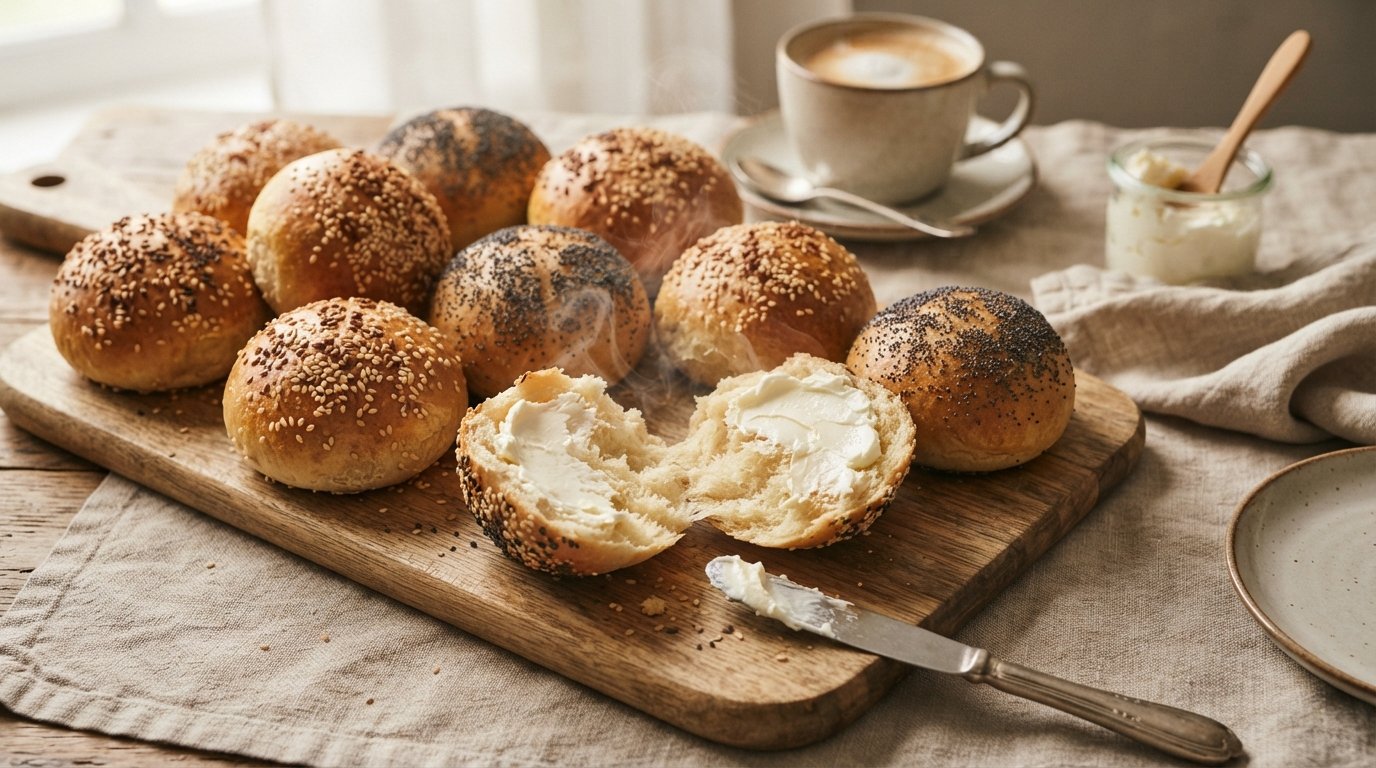
If your idea of a high-protein breakfast is another sad scoop of powder shaken into milk, these rolls will feel like a small miracle. They’re soft, fluffy, faintly nutty from wholegrain spelt, and each one carries around 13 grams of protein — with no protein powder, no yeast, and no waiting for dough to rise. You mix five ingredients, shape, and bake. That’s the whole job.
In a nutshell: High protein bread rolls made with quark and spelt flour are a quick, no-yeast breakfast bake. You mix five ingredients — spelt flour, quark, an egg, baking powder and a splash of water — shape into rolls, and bake. Each roll has around 13 g of protein and needs no protein powder.
This recipe started life as a German trend — Germans are slightly obsessed with quark, and for good reason. But the two “German” ingredients (quark and spelt) are the only things that trip people up outside Europe, so this guide includes a proper swap list, including options for readers in the UK, US and South Asia. Let’s get into it.
Why these high protein bread rolls work
Regular bread rolls are mostly starch. A typical white roll gives you around 4–6 grams of protein and not much else. These swap a big chunk of that empty structure for two protein-dense ingredients — quark and egg — so you roughly double the protein without changing the fact that it’s still a soft, comforting roll you actually want to eat.
The second clever thing is what’s not in them. There’s no yeast, which means no proofing and no waiting around for an hour while the dough rises. The lift comes from baking powder, so the dough goes straight from bowl to oven. There’s also no protein powder, which so many “high protein” bakes rely on — the protein here comes from real food, so the rolls taste like bread, not like a chalky supplement.
Finally, wholegrain spelt does quiet work in the background. It’s an ancient relative of wheat with a gentle, nutty flavour and more fibre than plain white flour, which makes these rolls more filling and gives them a lovely wholesome character.
[internal link: quick high-protein breakfast ideas]
What is quark, and why does it make these rolls high protein?
Quark is a fresh, soft dairy product — somewhere between Greek yogurt and cream cheese — that’s hugely popular across Germany, Austria and much of central Europe. It’s mild, thick and only lightly tangy. Most German baking uses Magerquark, the low-fat version, which is where a lot of the magic comes from: low-fat quark is very high in protein and very low in fat, so it loads the rolls with protein while keeping them light.
That’s the whole reason quark is the hero here. It brings moisture and structure like a yogurt would, but with a bigger protein hit and a firmer set that behaves well in a dough.
No quark? The best substitutes (UK, US & South Asia)
This is the part most recipes leave out, and it’s the exact thing that stops people making these. Quark can be hard to find outside Europe — though UK supermarkets now stock it widely. If you can’t get it, here are the swaps that actually work, each at a 1:1 ratio:
- Thick Greek yogurt — the best all-rounder and the closest easy match. Use full-fat for richness, or 0% for the leanest, most Magerquark-like result. If it looks loose, strain it in a sieve lined with a cloth for 20–30 minutes first so it isn’t too wet.
- Skyr — the Icelandic strained dairy. Naturally thick, tangy and very high in protein. An excellent, almost seamless swap.
- Cottage cheese, blended — high protein and cheap, but grainy, so blend it completely smooth before using or your rolls will have little curds through them.
- Labneh — strained yogurt cheese common in Middle Eastern and South Asian shops. Thick and creamy; stir smooth first.
- Hung curd (strained dahi) — for readers in Pakistan and across South Asia, this is your easiest route. Hang plain yogurt in a muslin cloth for a few hours until thick, and it behaves almost exactly like quark. It’s the same principle as straining Greek yogurt.
A quick tip that applies to all of them: the wetter your substitute, the less added water you’ll need, so hold back the splash of water until you see how the dough comes together.
What is spelt flour, and what can you use instead?
Spelt (Dinkel in German) is an ancient grain closely related to wheat, with a mild, nutty, slightly sweet flavour. Wholegrain spelt keeps the bran and germ, so it’s higher in fibre. It does contain gluten, so it is not gluten-free.
If you can’t find it, swap it 1:1 with:
- Wholemeal (whole wheat) flour — the closest match in flavour and fibre.
- Plain / all-purpose flour — lighter and fluffier rolls, but less fibre and a milder taste.
- Atta (Indian/Pakistani wholemeal) — widely available in South Asia and a natural stand-in for wholegrain spelt; expect a slightly denser, heartier roll.
Ingredients you’ll need
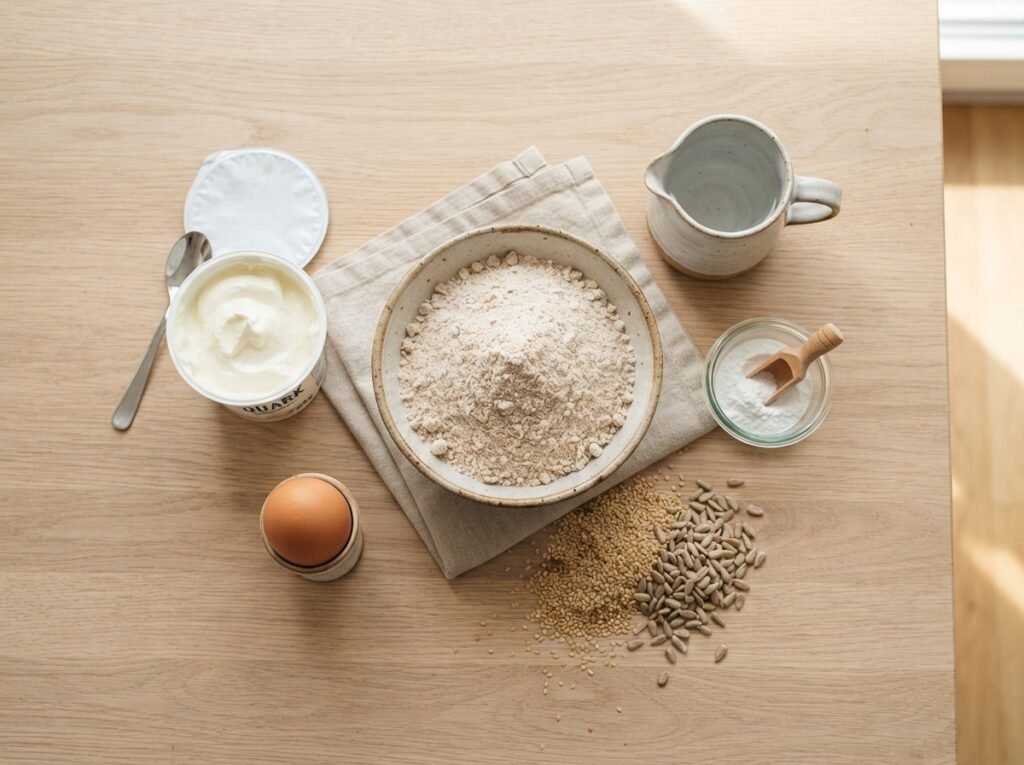
This makes about 6 rolls.
- 300 g wholegrain spelt flour (or a substitute above)
- 250 g quark (or a substitute above)
- 1 egg
- 2 tsp baking powder (this is what “½ a German packet” works out to — a German sachet is about 16 g, so half is roughly 8 g, or 2 level teaspoons)
- A splash of water (1–2 tbsp, only as needed to bring the dough together)
- Optional: a pinch of salt, and seeds (sesame, sunflower, poppy) for the tops
On the salt: the original recipe skips it, but a small pinch really lifts the flavour of the spelt — I’d add about ½ teaspoon.
How to make high protein bread rolls
Start to finish is about 30 minutes, most of it baking.
Step 1 — Make the dough
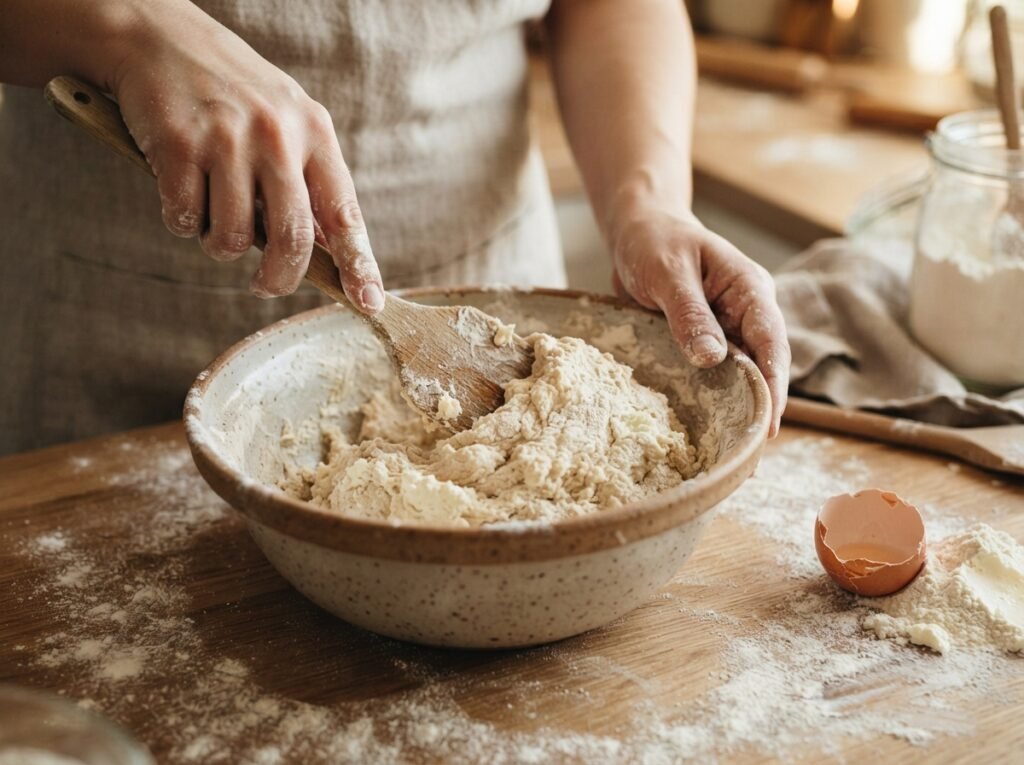
Preheat the oven (see the temperature note below). In a bowl, combine the spelt flour, baking powder and optional salt. Add the quark and the egg, then mix — a spatula or your hands both work — until it comes together into a soft dough. Add the splash of water only if it feels too dry to bind. The dough will be soft and slightly sticky, which is exactly right; resist the urge to add loads of extra flour, as that makes the rolls dense.
Step 2 — Shape the rolls
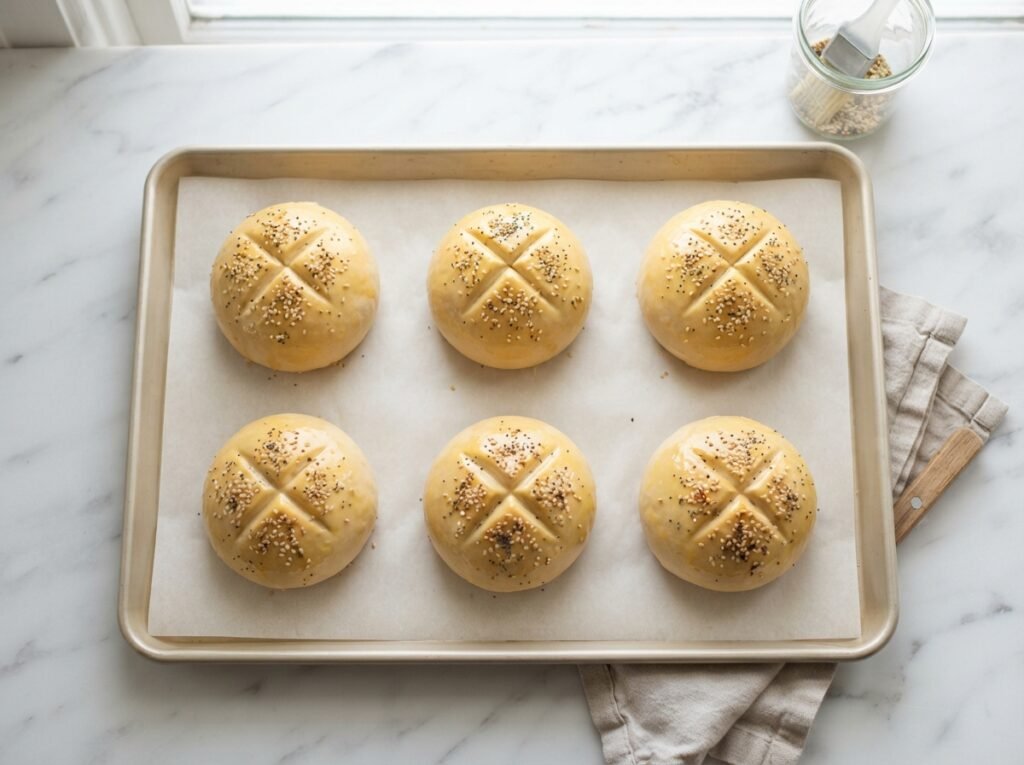
With lightly floured or damp hands, divide the dough into 6 pieces and shape each into a round roll. Place them on a lined baking tray with a little space between them. For a bakery look, brush the tops with a little beaten egg or milk, scatter over seeds, and score a shallow cross or slash on each with a sharp knife.
Step 3 — Bake
Here’s my one honest change to the source recipe. The original says to bake at 160°C for 20–25 minutes, but that’s on the low side for bread rolls — you’ll likely get pale, slightly underbaked results. I’d bake at 180°C fan (200°C / 400°F conventional) for 22–28 minutes, until the rolls are golden on top and sound hollow when tapped underneath. If you’re unsure, a skewer pushed into the centre should come out clean. Every oven differs, so check from the 20-minute mark.
Step 4 — Cool
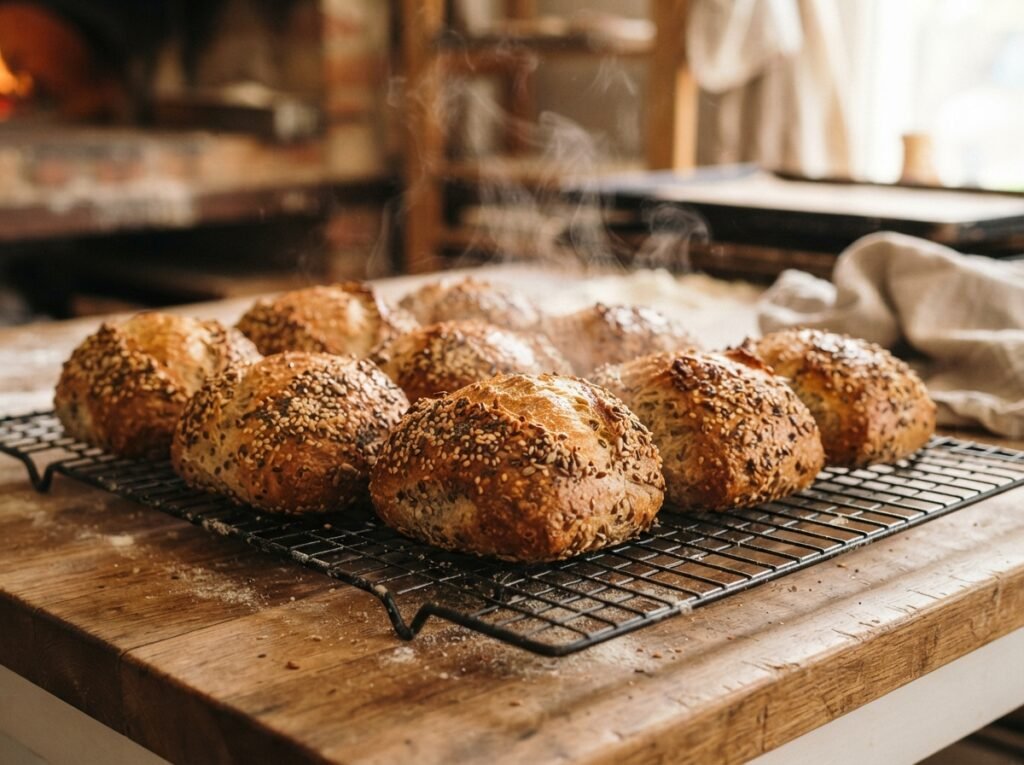
Let the rolls cool on a wire rack for at least 10 minutes before cutting. They finish setting as they cool, and slicing too early can make the crumb feel gummy.
Tips for fluffy, not dense, rolls
- Use fresh baking powder. It’s the only leavening here, so a tired, old tin means flat rolls. If yours has been open a while, replace it.
- Don’t over-flour the dough. A soft, slightly tacky dough bakes up light. A dry, stiff dough bakes up heavy.
- Strain wet substitutes. If you’re using loose yogurt instead of quark, drain it first — too much moisture is the number-one cause of dense, doughy rolls.
- Don’t overmix. Mix just until combined. Working the dough hard develops gluten and toughens the rolls.
- Weigh your ingredients. Baking is chemistry; a kitchen scale gives far more reliable results than cups here.
Flavour variations
The plain rolls are a blank canvas, which makes them endlessly adaptable:
- Bagel-style (Team Bagel!): shape into rounds, poke a hole in the middle, and top generously with a sesame-and-poppy “everything” mix.
- Savoury: fold grated cheese, chopped herbs, or a little garlic powder into the dough.
- Lightly sweet: add a teaspoon of sweetener and a handful of berries or a little cinnamon for a breakfast-leaning roll.
- Extra seedy: mix sunflower, flax or pumpkin seeds straight into the dough for more crunch, fibre and healthy fats.
How to serve them
These are at their best warm, split and topped. A few ideas:
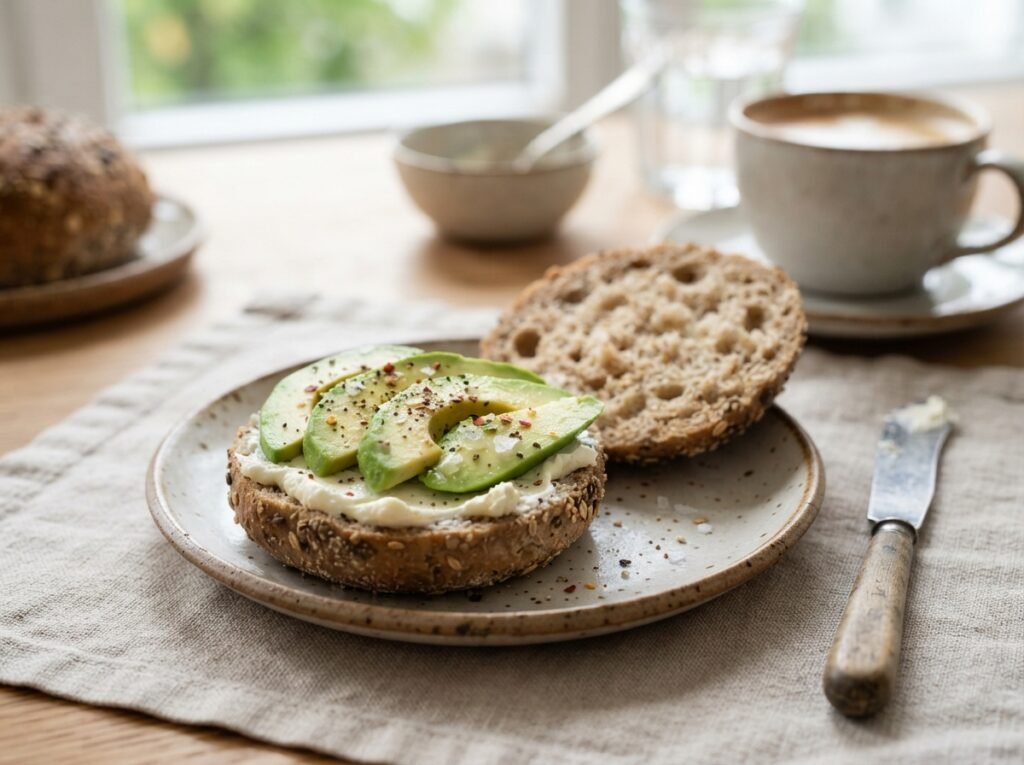
- High-protein breakfast: cream cheese or quark and smoked salmon, or a fried egg and avocado.
- Savoury lunch: hummus, cheese, or as a slider bun.
- Sweet: a little butter and jam, nut butter, or honey.
They also make excellent lunchbox or gym-bag food because the protein keeps you full for hours.
Storage and freezing
Store cooled rolls in an airtight container at room temperature for up to 2 days, or in the fridge for up to 4. Because they have no preservatives, they firm up faster than shop bread — a quick warm in the oven or toaster revives them beautifully.
They freeze brilliantly. Freeze fully cooled, ideally sliced, for up to 1 month, and toast straight from frozen. That makes them perfect for batch-baking a weekend’s worth of breakfasts.
Nutrition (per roll, approximate)
Based on 6 rolls made with low-fat quark and wholegrain spelt:
| Nutrient | Per roll (approx.) |
|---|---|
| Calories | ~210 kcal |
| Protein | ~13 g |
| Carbohydrates | ~33 g |
| Fat | ~2 g |
| Fibre | ~5 g |
An honest note on the numbers: the source didn’t provide nutrition, so these are my estimates from the ingredients — treat them as a guide, not a lab result. Around 13 g of protein per roll is a genuine “high protein” figure (a normal bread roll has roughly 4–6 g), and it holds up because both quark and egg are protein-dense. The values shift with what you use: full-fat quark or a full-fat substitute pushes the calories and fat up, and if you make fewer, larger rolls, each one carries more of everything.
This article is for general information and is not medical or dietary advice. Check the labels on your own ingredients if you’re tracking macros or have dietary restrictions.
Key takeaways
- High protein bread rolls made with quark and spelt deliver around 13 g of protein each, with no protein powder and no yeast.
- Only five ingredients and no rise time — mix, shape and bake in about 30 minutes.
- No quark? Thick Greek yogurt, skyr, blended cottage cheese, labneh or hung curd (strained dahi) all work 1:1; strain loose ones first.
- No spelt? Wholemeal flour, plain flour or atta all substitute 1:1.
- Bake at 180°C fan (not the source’s low 160°C) for properly golden, fully cooked rolls, and freeze extras to toast through the week.
FAQ
Can I make these high protein bread rolls without quark?
Yes. Quark can be hard to find outside Europe, so swap it 1:1 with thick Greek yogurt, skyr, blended cottage cheese, labneh, or hung curd (strained dahi). For the closest match, use a low-fat, well-strained option so the dough isn’t too wet. Loose yogurt should be drained for 20–30 minutes first.
Do these rolls have protein powder in them?
No. That’s part of the appeal. The protein comes from real food — quark (or a high-protein dairy substitute) and egg — so the rolls taste like proper bread rather than a supplement. Each roll still delivers around 13 g of protein.
Why are my protein rolls dense instead of fluffy?
The usual culprits are old baking powder, too much flour, or a substitute that was too wet. Use fresh baking powder, keep the dough soft and slightly sticky rather than dry, and strain loose yogurt before using it. Avoid overmixing, which toughens the crumb.
What can I use instead of spelt flour?
Wholemeal (whole wheat) flour is the closest swap and keeps the fibre and nutty flavour. Plain flour gives lighter, fluffier rolls with less fibre. Atta, common across South Asia, also works 1:1 for a heartier roll. Note that spelt is not gluten-free.
What temperature should I bake them at?
The original recipe suggests 160°C, but that tends to leave rolls pale and slightly underbaked. Baking at 180°C fan (200°C / 400°F conventional) for about 22–28 minutes gives a golden crust and a cooked centre. Check with a skewer — it should come out clean.
Can I freeze these rolls?
Yes, they freeze very well. Cool them fully, slice them, and freeze for up to a month. Toast straight from frozen whenever you want one. Batch-baking and freezing makes them an easy grab-and-go high-protein breakfast.