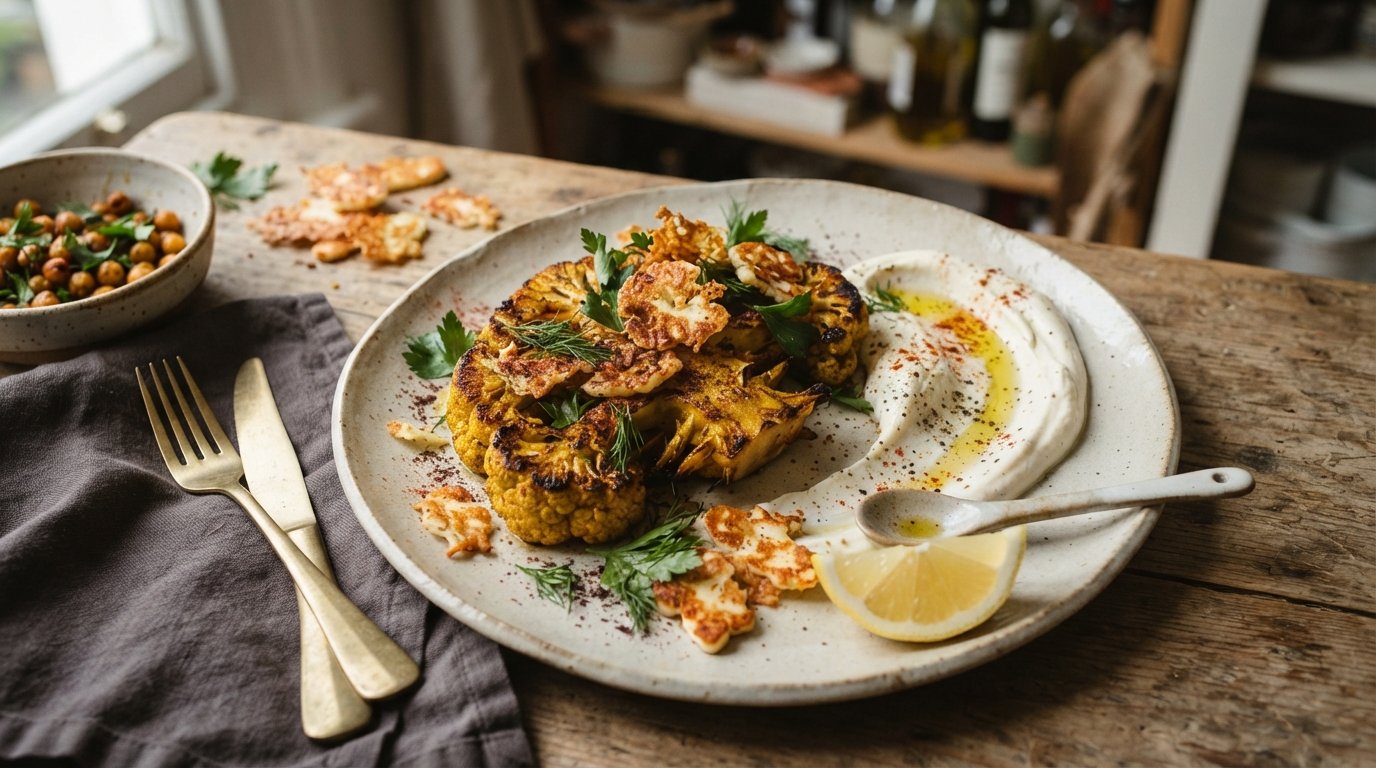

Most halloumi recipes fry it in thick, squeaky slabs. This one does something different — and better. The halloumi gets shaved almost paper-thin and baked until the edges turn lacy and crisp, so it shatters like a savoury crisp over a golden, spice-roasted cauliflower steak. Add a cool, sharp horseradish-mustard yogurt and you have a vegetarian dinner that looks like it came out of a restaurant but is made entirely on one baking sheet.
In a nutshell: Cauliflower steaks with halloumi is a low-carb, gluten-free vegetarian dinner made entirely in the oven. Thick slices of cauliflower are roasted with paprika and garlic until golden, halloumi is shaved thin and baked until crisp, and everything is finished with a tangy horseradish-mustard Greek yogurt. It’s ready in about 40 minutes.
This isn’t another mixed-veg tray bake or a battered halloumi-fries snack. It’s a composed plate — meaty cauliflower, crisp cheese, punchy sauce — that happens to be sugar-free and low in carbs without any effort. Here’s exactly how to make it.
Why this cauliflower and halloumi dish works
Cauliflower has quietly become one of the most useful vegetables in a home cook’s kitchen because it takes on whatever flavour you give it and completely changes character when you roast it instead of boiling it. Cut into thick slabs — “steaks” — the outside caramelises and turns nutty while the inside stays tender. It genuinely eats like a main course, not a sad side.
The clever part here is the halloumi technique. Instead of frying it in chunks (which stays soft and squeaky) or coating it in flour and breadcrumbs for fries (which adds gluten and carbs), you shave it thin and bake it dry. The moisture cooks off, the edges crisp, and you get delicate, salty shards that contrast beautifully with the soft cauliflower. It’s also naturally gluten-free and sugar-free, because there’s no batter and no honey glaze.
Then the sauce ties it together. A horseradish-mustard Greek yogurt is sharp, creamy and cutting — it slices right through the richness of the cheese and the sweetness of the roasted cauliflower. Most cauliflower-steak recipes lean on tahini or garlic yogurt; this punchier version is what makes the plate feel fresh.
What are cauliflower steaks?
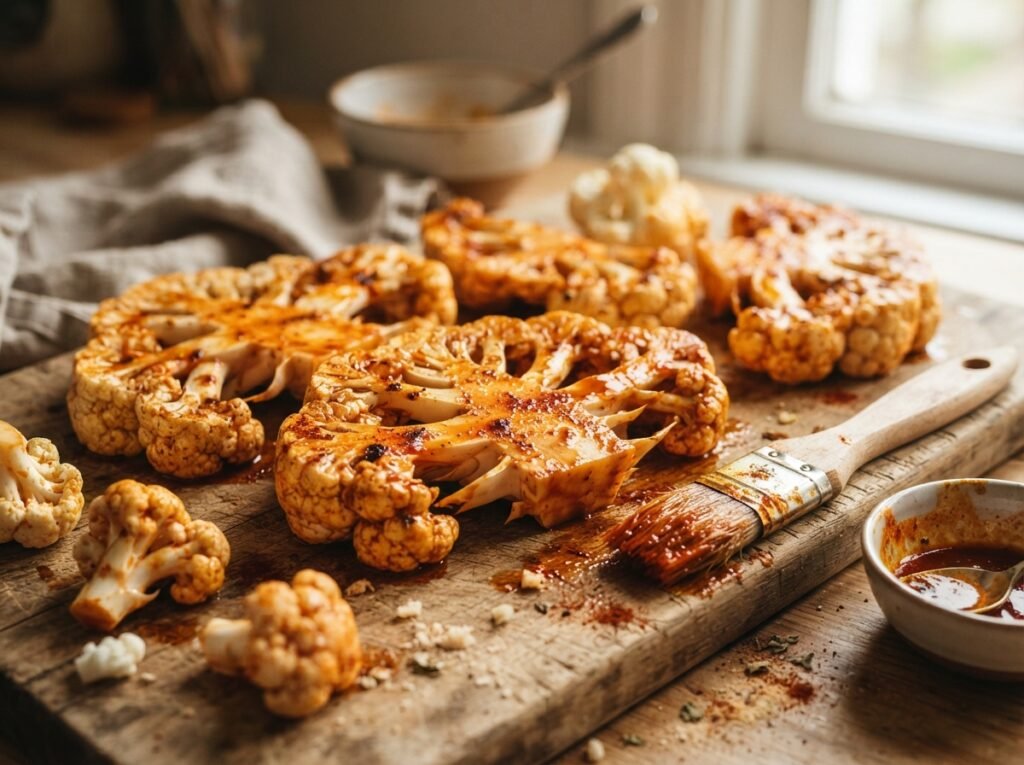
Cauliflower steaks are simply thick, flat slices cut straight down through a whole head of cauliflower, from the crown through the stem. Because the stem holds the florets together, the middle slices stay intact as neat slabs — those are your “steaks.”
Here’s the honest bit most recipes skip: a single cauliflower only gives you two or three proper steaks. The rounded outer edges break into loose florets. Don’t throw those away — roast them on the same tray. They crisp up beautifully and are cook’s-treat delicious, or you can pile them onto the plate alongside the intact steaks.
How to cut them: Pull off the green leaves, trim the very base of the stem but leave the core intact, sit the cauliflower on its base, and slice down through the middle into slabs about 2–3 cm thick.
The crispy baked halloumi trick (the star of the dish)
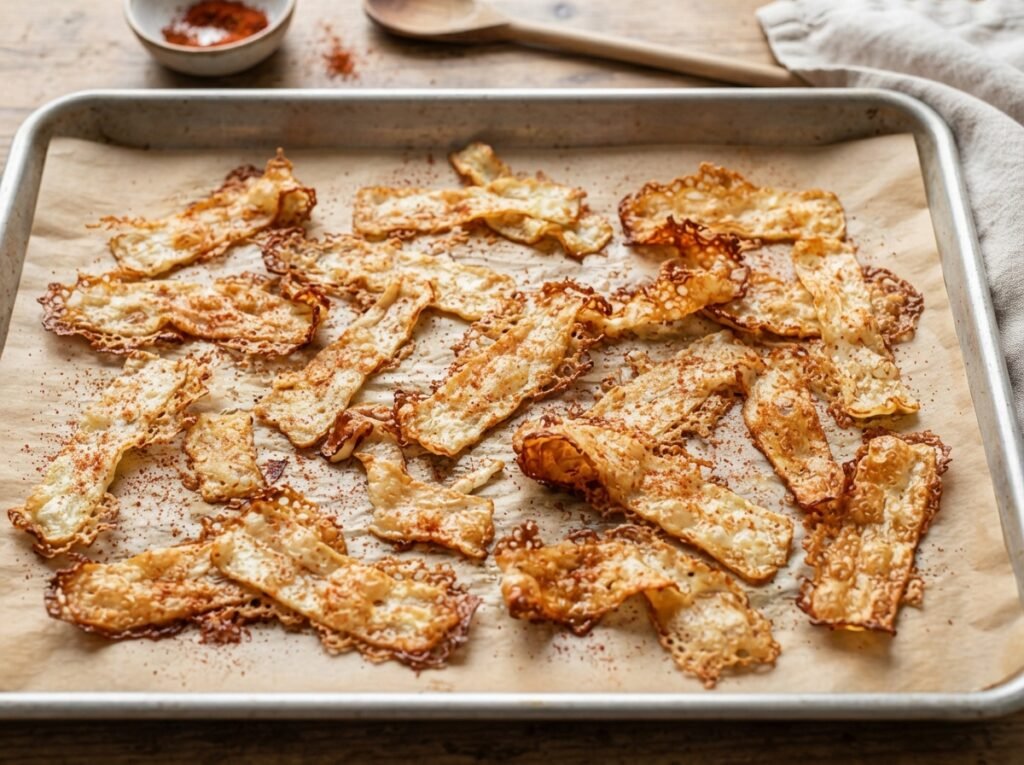
This is the technique worth learning. Halloumi has a high melting point, which is why it holds its shape when cooked. Slice it thick and it stays soft and bendy; shave it thin and bake it, and the moisture escapes so the cheese firms and crisps instead.
Use a vegetable peeler or a sharp knife to shave the halloumi into thin, wide strips — as close to paper-thin as you can manage. Toss them very lightly with a tiny amount of oil, some paprika and black pepper, but no salt — halloumi is already salty, and salt draws out moisture that stops it crisping. Lay the strips in a single layer, not overlapping, and bake until the edges just take on colour, then pull them straight out. They firm up more as they cool. Watch them closely near the end; thin halloumi goes from golden to too-dark fast.
The horseradish-mustard yogurt
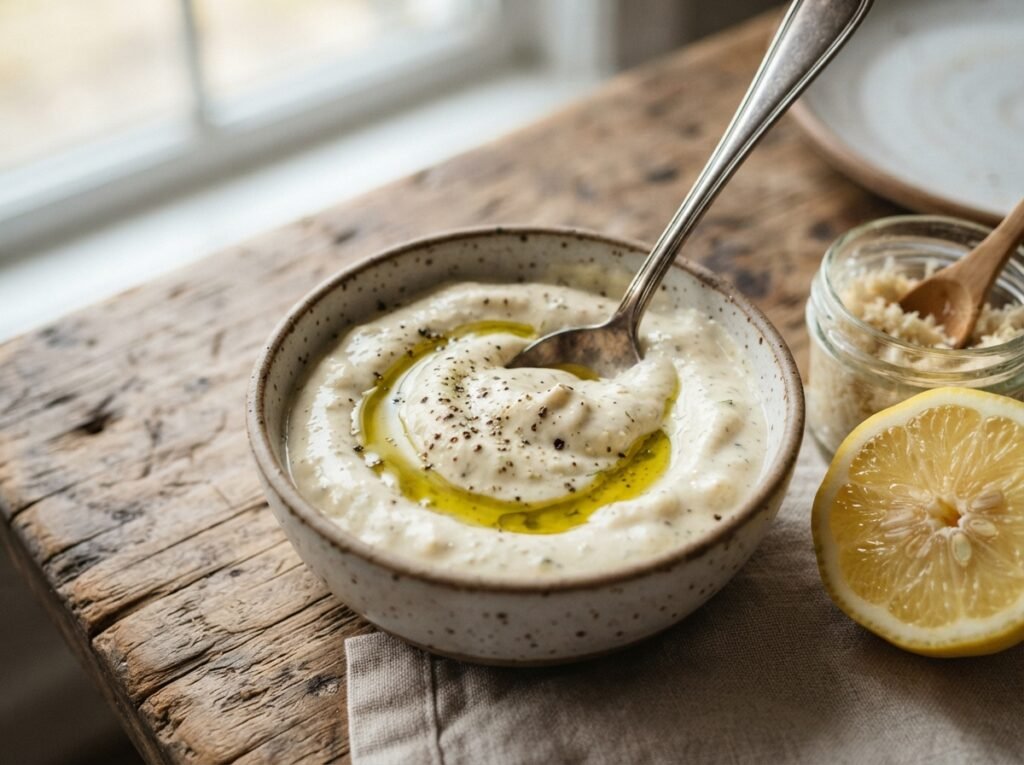
This three-minute sauce does a lot of heavy lifting. Stir together thick Greek yogurt, a little horseradish, a touch of mild mustard, lemon juice, salt and white pepper. Let it sit for five minutes so the flavours come together, then taste and adjust — more horseradish for heat, more lemon for brightness.
Start with less horseradish than you think you want and build up; brands vary wildly in strength. Use a sugar-free horseradish to keep the dish sugar-free. If you want it a touch richer, a teaspoon of olive oil stirred in at the end rounds it off.
Ingredients you’ll need
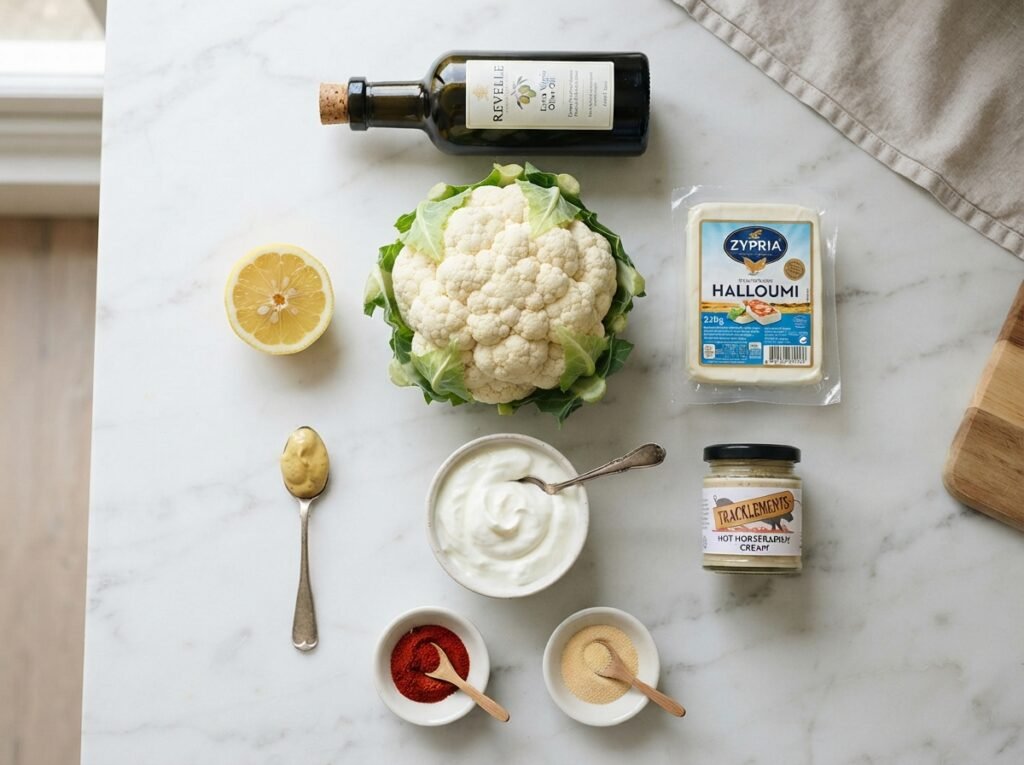
Quantities below make 2 main-course portions.
For the cauliflower
- 1 cauliflower
- 2 tbsp extra virgin olive oil
- 1 tsp paprika (mild or smoked)
- ½ tsp garlic powder
- Salt and black pepper
For the crispy halloumi
- 100 g halloumi
- 1 tsp extra virgin olive oil (used very sparingly)
- ½ tsp paprika
- Black pepper (no salt)
For the horseradish-mustard yogurt
- 150 g Greek yogurt (10% / full-fat is best for body)
- ½–1 tsp horseradish (sugar-free)
- ½ tsp mild mustard
- 1–2 tsp lemon juice
- Salt and white pepper
- Optional: 1 tsp extra virgin olive oil
To finish (optional): a drizzle of raw extra virgin olive oil over the cauliflower.
A quick note on smoked vs mild paprika: smoked paprika gives the cauliflower a deeper, almost barbecued flavour that pairs really well with the sharp yogurt; mild sweet paprika keeps it gentler and more family-friendly. Both work — pick your mood.
How to make cauliflower steaks with halloumi
Total time is about 40–45 minutes, most of it hands-off. You can run the cauliflower and halloumi in the same oven.
Step 1 — Roast the cauliflower
Preheat the oven to 180°C fan (about 200°C / 400°F conventional). Cut the cauliflower into 2–3 cm slabs as described above. Mix the olive oil with the paprika, garlic powder, salt and pepper, then brush it over both sides of each steak. Lay them on a lined baking tray with space between them so they roast rather than steam. Bake for 35–40 minutes, turning halfway, until golden and tender when pierced with a knife.
Step 2 — Crisp the halloumi
Shave the halloumi paper-thin. Toss the strips lightly with the teaspoon of oil, the paprika and black pepper — no salt. Spread them in a single layer on a separate lined tray. Bake at the same 180°C fan for 12–16 minutes, turning after 7–8 minutes, and take them out the moment the edges colour. They crisp further as they cool.
Step 3 — Make the yogurt
Stir the yogurt, horseradish, mustard, lemon juice, salt and white pepper together until smooth. Rest for 5 minutes, then taste and adjust.
Step 4 — Assemble
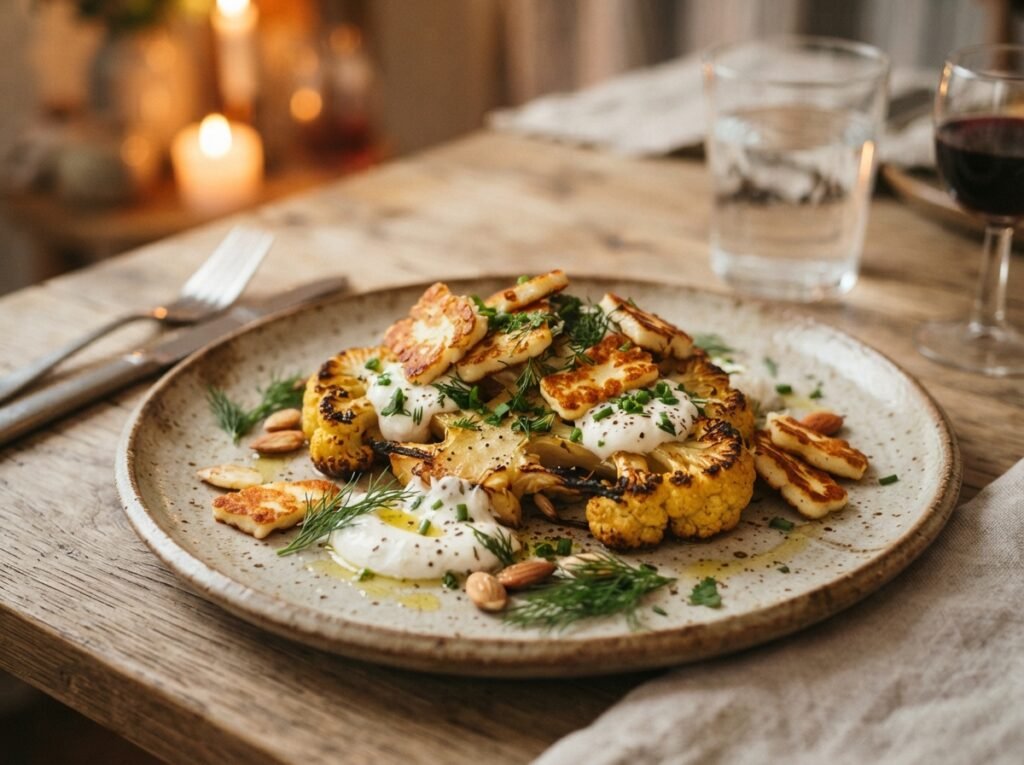
Place the cauliflower steaks in the centre of each plate. Spoon or dot the horseradish yogurt around and over them, but don’t drown them — you want the roasted flavour to show through. Scatter the crisp halloumi strips loosely on top so they stay crunchy. Finish with an optional drizzle of raw olive oil over the cauliflower and serve straight away.
Tips for the best results
- Keep the core in when slicing. It’s the stem that holds each steak together. Cut it away and your steaks fall into florets.
- Give the cauliflower room. Crowded steaks steam and go soggy instead of caramelising. Use two trays if you need to.
- No salt on the halloumi. It’s salty enough, and added salt pulls out moisture and stops it crisping.
- Pull the halloumi early. It looks underdone when it comes out but firms and crisps as it cools. Leave it in “until it looks perfect” and it’ll be tough.
- Build the horseradish gradually. It’s easy to overpower the plate. Add, taste, repeat.
Easy swaps and variations
- Different sauce base. No horseradish? A little Dijon plus lemon, or a garlic-lemon yogurt, both work — you lose the signature kick but keep the freshness.
- Add crunch and colour. Toasted pine nuts, pomegranate seeds, or a scatter of fresh herbs (parsley, dill or chives) lift the plate and photograph beautifully.
- Make it heartier. Serve over a spoon of cauliflower rice, a grain like quinoa (adds carbs), or alongside a simple leafy salad.
- Spice it up. Swap plain paprika for a pinch of chilli, or add cumin and coriander for a more Middle Eastern profile.
- Dairy-free. Use a firm plant-based halloumi alternative and a thick unsweetened plant yogurt. The crisping works less dramatically but the idea holds.
What to serve it with
As written this is a complete low-carb vegetarian dinner for two. To stretch it or make it more filling:
- A crisp green salad with a lemon dressing keeps things light and bright.
- Warm flatbread or pita for anyone not watching carbs — great for scooping up the yogurt.
- A grain bowl base (quinoa, bulgur or rice) turns two steaks into a meal for more people.
- Roasted chickpeas or a lentil side add plant protein and fibre.
Storage and make-ahead
The roasted cauliflower keeps in an airtight container in the fridge for up to 3 days and reheats well in the oven or air fryer to bring back some crispness. The horseradish yogurt keeps for 2–3 days chilled. Bake the halloumi fresh, though — crisp halloumi softens and turns chewy once stored and reheated, so it’s always best straight from the oven. You can shave and season the raw halloumi ahead of time so it’s ready to bake.
Nutrition (per serving, approximate)
Based on the ingredients above, split across 2 portions:
| Nutrient | Per portion (approx.) |
|---|---|
| Calories | ~600 kcal |
| Fat | ~45 g |
| Protein | ~26 g |
| Carbohydrates | ~14 g |
| Fibre | ~6 g |
That’s roughly 8 g net carbs per portion, which keeps this comfortably low-carb and keto-friendly.
An honest note on the numbers: the original source lists 630 kcal, 49 g fat and 33 g protein. The calories and fat sit at the top of the range because the recipe uses a generous amount of olive oil (2 tbsp on the cauliflower plus more for the halloumi and optional drizzles) — use less oil and it drops. The 33 g protein figure looks optimistic for these exact quantities; realistically you’ll land nearer 25–27 g with 100 g halloumi and 150 g Greek yogurt. To genuinely hit 30 g+, add more halloumi or use a high-protein (0%) Greek yogurt. Treat all of these as estimates that shift with your specific brands.
This article is for general information and is not medical or dietary advice. Check the labels on your own ingredients if you’re following a strict eating plan.
Key takeaways
- Cauliflower steaks with halloumi is a one-oven, low-carb, sugar-free, gluten-free vegetarian dinner ready in about 40 minutes.
- Cut the cauliflower into 2–3 cm slabs with the core intact so the steaks hold together; expect 2–3 steaks per head plus loose florets to roast.
- The standout trick: shave the halloumi paper-thin and bake it dry (no salt) for crisp, shard-like strips instead of soft fried chunks.
- A horseradish-mustard Greek yogurt cuts the richness and sets this apart from the usual tahini or garlic sauces.
- It’s flexible — change the sauce, add crunch, or serve over grains to feed more.
FAQ
How many steaks do you get from one cauliflower?
Usually two or three intact steaks from the centre of the head, because the stem holds those middle slices together. The rounded outer edges break into loose florets — roast them on the same tray rather than wasting them, as they crisp up deliciously.
How do you get halloumi crispy in the oven?
Shave it as thin as you can with a peeler or sharp knife, toss it in just a little oil with no salt, and spread it in a single layer. Bake until the edges colour, then remove it immediately. It firms and crisps further as it cools. Thick slices stay soft, so thinness is the key.
Is this recipe gluten-free?
Yes. Unlike battered halloumi fries, which use flour and breadcrumbs, this halloumi is baked with just oil and spices, so there’s no gluten. Always confirm your specific halloumi, mustard and horseradish are gluten-free if you’re cooking for someone with coeliac disease.
Can I make cauliflower steaks ahead of time?
The roasted cauliflower and the yogurt sauce both keep for a few days in the fridge, and the cauliflower reheats well in the oven or air fryer. Bake the halloumi fresh each time, though, as it loses its crispness once stored and reheated.
What can I use instead of horseradish?
A little extra mustard (Dijon works well) with lemon juice gives a similar sharp kick. You can also make a simpler garlic-lemon yogurt. You’ll lose the distinctive horseradish heat but keep the fresh, tangy contrast against the cheese and cauliflower.
Is this low-carb and keto-friendly?
Yes. At roughly 8 g net carbs per portion it fits comfortably into low-carb and most keto plans. The main carbs come from the cauliflower and yogurt, both of which are moderate, so it stays well within typical daily limits.