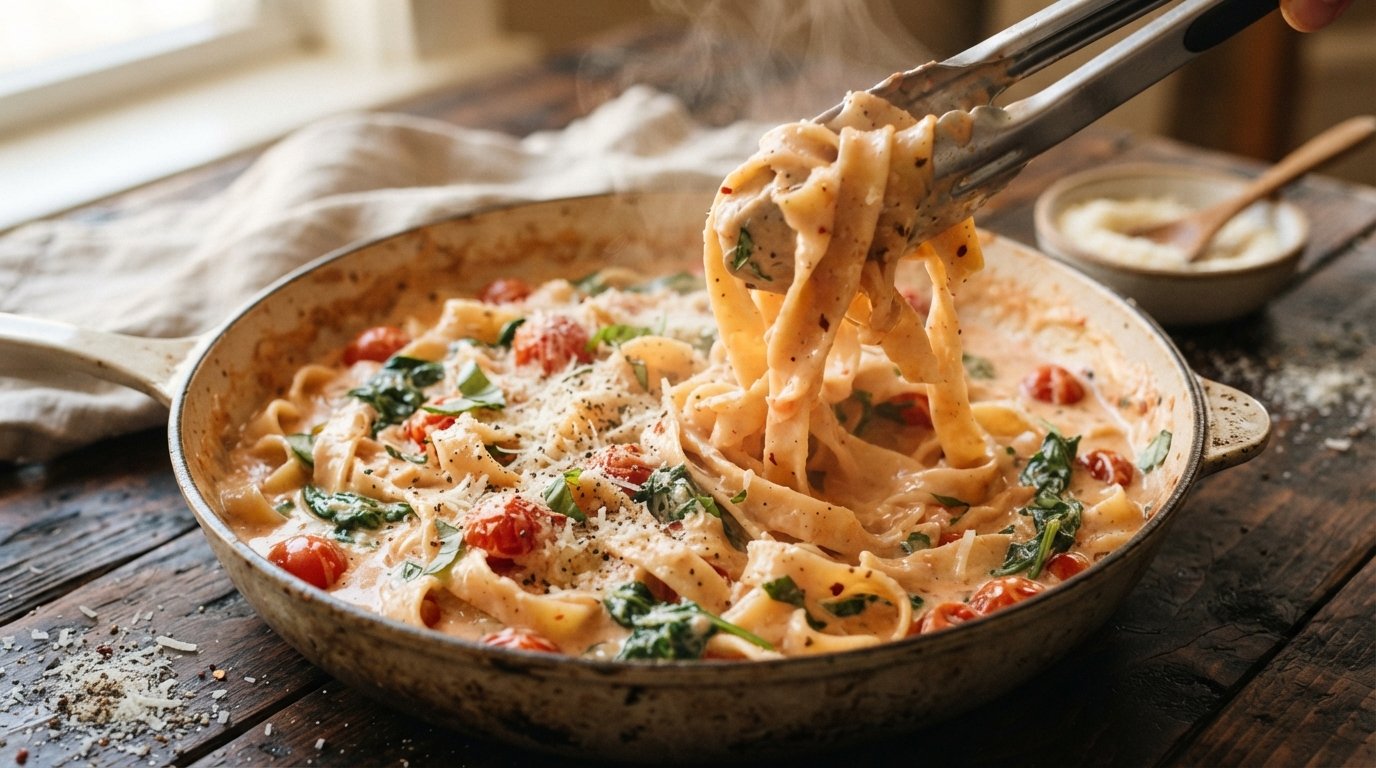
One Pot Creamy Tomato Spinach Pasta — The Viral Method Skips the Best Part
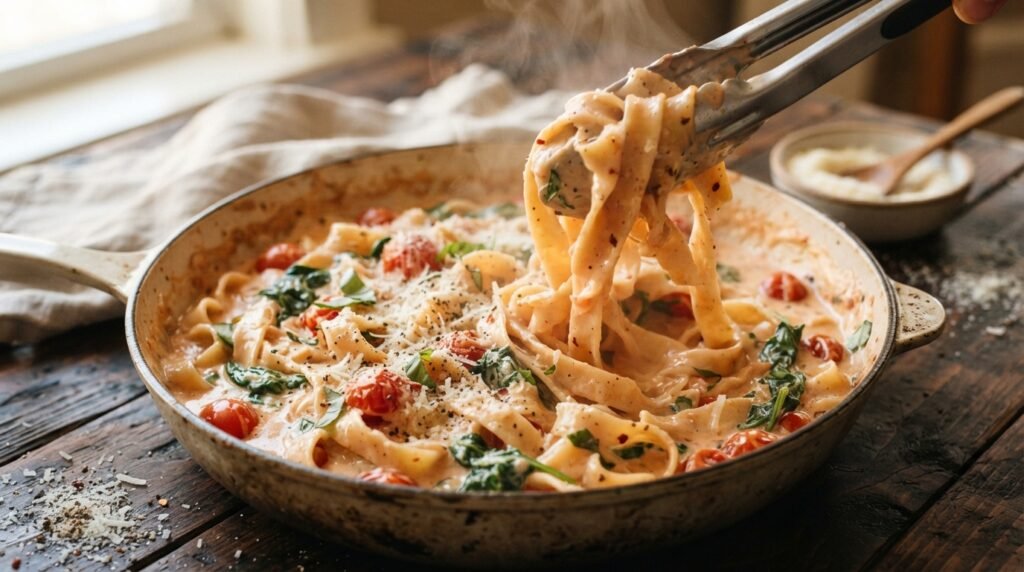
You’ve seen this pasta. Tagliatelle nests in a pan, tomatoes and spinach arranged around them, cream and broth poured over, lid on, thirty seconds of video, dinner.
It works. It’s genuinely good. And the method you’ve been shown is optimised for the camera rather than the plate — because the single most useful thing you can do to this dish is a step that doesn’t film well.
Soften the onion first.
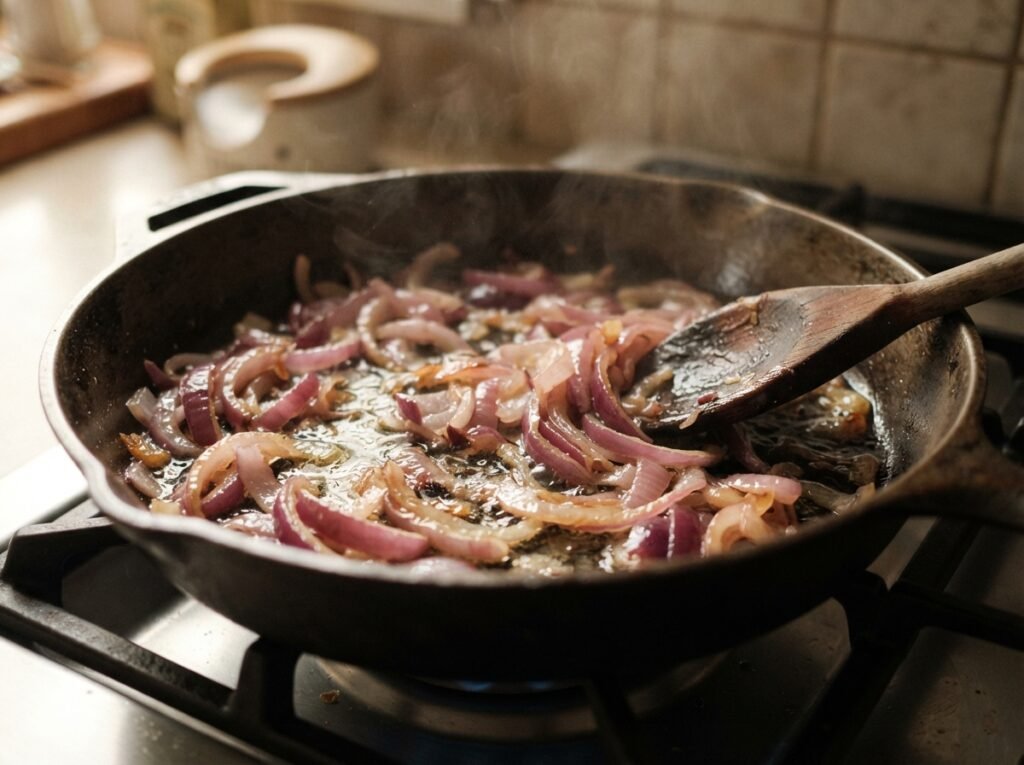
Ninety seconds, before anything wet goes near the pan. It’s invisible in a video and it’s most of the difference between a pasta that tastes like a proper dinner and one that tastes like raw onion boiled in cream.
The 40-Second Answer
One pot creamy tomato spinach pasta cooks tagliatelle directly in broth, tomatoes and cream so the pasta’s starch thickens the sauce and nothing needs draining. Soften the onion and garlic in oil first rather than layering everything raw — then add liquids, cook 12–15 minutes, and stir the spinach and Parmesan in at the end.
Key Takeaways
- Cook the aromatics first. The viral layered version skips this and pays for it.
- Break the nests up once they soften. Leave them and you get a clump.
- Spinach goes in at the very end. It wilts in about ninety seconds.
- Stir it. No colander means nothing stops the pasta welding to the base.
- Top up with liquid as you go — the pasta is going to drink more than you think.
Why One Pot Pasta Works
Normally you throw the best part away. Pasta cooks in water, that water fills with released starch, and you tip it down the sink and then try to rebuild the same effect with cream.
One-pot skips the loss. As one recipe developer puts it, <cite index=”120-1″>the starch from the pasta cooking water is the secret to creating a luscious sauce all in one pot — it dissolves right into the rich cooking liquid with no draining required.</cite>
That’s the whole mechanic, and it’s why this dish gets creamy before you’ve added much cream at all. It also means the liquid isn’t background — it’s the sauce, and everything you put in it ends up in the finished dish. Which is exactly why what you do in the first ninety seconds matters.
The Ninety Seconds the Video Skips
Here’s the viral method, as everyone films it: <cite index=”112-1″>place the pasta nests in the centre of a large pan, arrange cherry tomatoes, onion, garlic and spinach around them, add tomato purée on top, drizzle with olive oil, pour over the cream and broth so the pasta is mostly covered, and cook covered.</cite>
Look at what’s happening there. The onion goes in raw. The garlic goes in raw. The tomato purée goes in on top of the pasta and never touches a hot dry surface. Then it’s all covered and simmered in liquid.
Simmering in liquid is not the same as frying. An onion boiled in cream and broth becomes soft and sweet-ish and that’s it. An onion softened in hot oil first releases its sugars and develops a savoury base underneath everything else. Same with garlic. Same, especially, with tomato purée — concentrated tomato tastes tinny until heat converts it, and it needs a minute or two of direct contact with a hot pan to do that.
One recipe on this SERP does it properly, and it’s noticeably the better recipe as a result: <cite index=”119-1″>heat olive oil in a large deep skillet over medium heat, add the onion and cook 3–4 minutes until softened, then stir in the garlic and red pepper flakes and cook a minute more.</cite> Only then do <cite index=”119-1″>the crushed tomatoes, broth, cream, salt and pepper</cite> go in.
That’s not a different recipe. It’s the same recipe with the first ninety seconds put back.
Why the trend dropped it is not a mystery. The layered version is one continuous overhead shot: raw ingredients arranged prettily, liquid poured, lid on, reveal. Softening an onion is thirty boring seconds of a beige thing in a pan and it ruins the composition — the pretty arrangement is gone before you start.
The video is optimised for the video. You’re optimising for dinner. Different job.
Ingredients
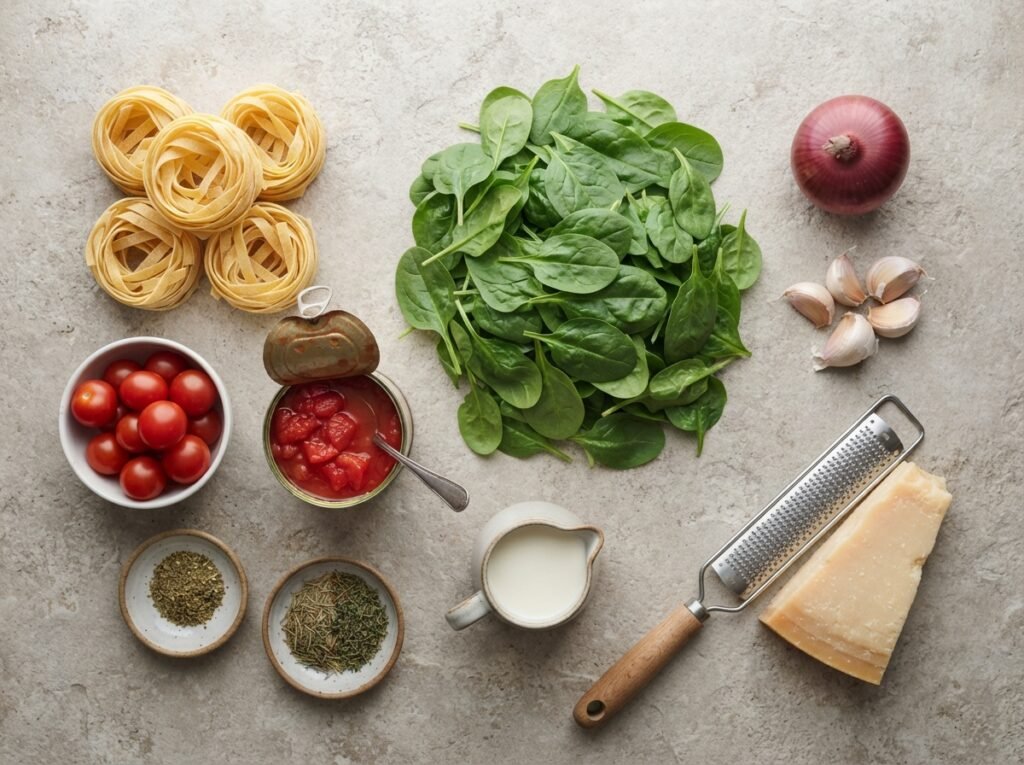
Serves 3–4
- ~250g tagliatelle nests
- 600ml vegetable broth
- 250ml cream
- 200g fresh tomatoes
- ½ tin chopped tomatoes
- 100g baby spinach
- 1 red onion
- Parmesan, to taste
- Salt and pepper
- Italian herbs, oregano
Two ingredient notes.
The double tomato is unusual and it’s the best idea in the recipe. Nearly every version of this dish on the internet uses cherry tomatoes and nothing else. This one uses fresh tomatoes and tinned, and they’re doing different jobs: fresh tomatoes burst and give you sweetness and texture, tinned give you body and the acidic backbone. Most one-pan versions taste thin because they’re relying on a handful of cherry tomatoes to be a sauce. This one isn’t.
If you’re using fresh tomatoes rather than cherry, note the technique: <cite index=”120-1″>sauté fresh tomatoes in the pot for 5–10 minutes over low heat with a little olive oil until they burst and release their juices.</cite> They need help. Cherry tomatoes burst on their own; larger tomatoes want encouragement.
Nests are the right shape and they need managing. <cite index=”113-1″>Nests are easier to manage in the pan, but any long pasta works well.</cite> They go in whole and hold their shape for the first few minutes — the mistake is leaving them like that. Once they’ve softened enough to move, break them apart with tongs. Left alone they cook into a solid disc with a raw centre.
Step 1: The Base
Slice the red onion. Soften it in oil over medium heat for three or four minutes until translucent. Add the garlic for the last thirty seconds.
Then the fresh tomatoes. Give them five minutes over a low heat until they start to collapse and release their juice. This is the step that turns tomatoes into sauce rather than tomatoes sitting in sauce.
Then the tinned tomatoes, the herbs, oregano, salt and pepper.
Season now and taste now. Once the pasta is in, the starch mutes everything and your window narrows. Every pasta dish is under-seasoned because people season at the end.
Step 2: Liquid and Pasta
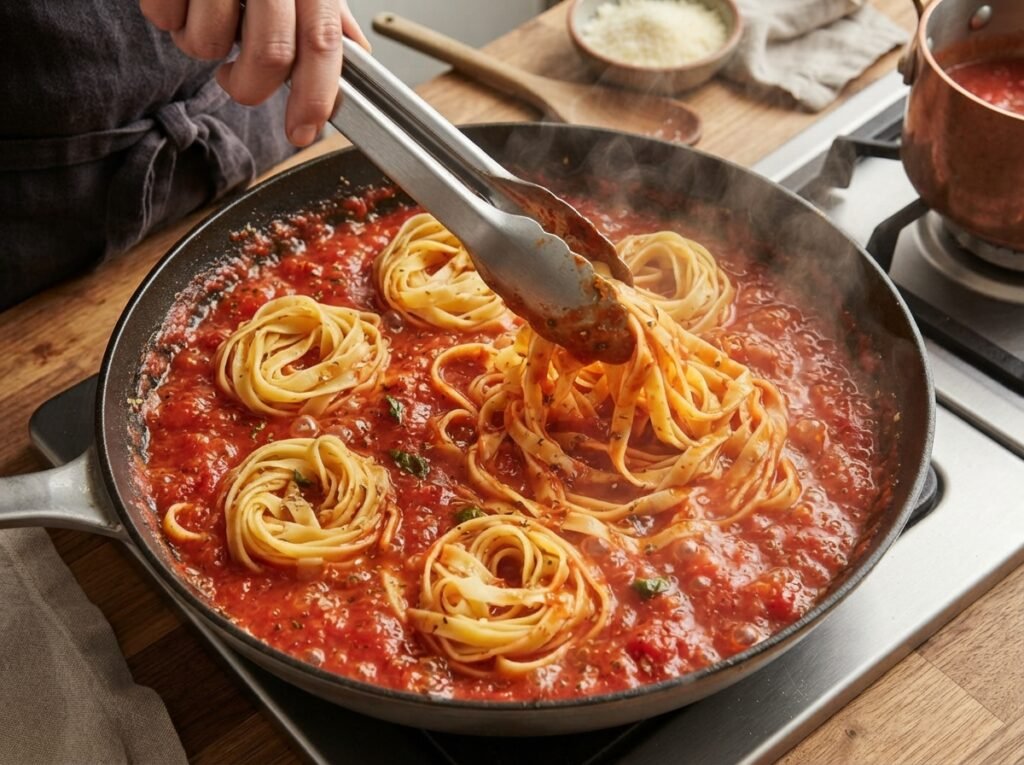
Add the broth. Bring it to a simmer, then add the nests.
Cook for 12–15 minutes, uncovered, at a steady simmer. This is the range the established versions converge on — <cite index=”119-1″>simmer uncovered 12–14 minutes, stirring occasionally, until the pasta is tender and the sauce has thickened</cite>, and <cite index=”115-1″>cook until the pasta is al dente, about 15 minutes.</cite>
Three things matter here:
Break the nests up once they’ve softened enough to move, around the three-minute mark. Tongs, gentle, separate the strands.
Stir it, regularly. <cite index=”120-1″>Stir the pasta every 2–3 minutes to prevent the noodles from sticking.</cite> There’s no colander here — anything that catches on the base stays there and burns.
Top up the liquid. <cite index=”119-1″>Add a splash more broth if it gets too thick before the pasta is done.</cite> The pasta absorbs as it cooks and the recipe’s numbers are a starting point, not a rule. Aim for slightly looser than looks right; it’ll tighten as it sits.
Step 3: The Cream
Once the pasta is nearly there, take the pan off the heat and stir the cream through.
I’ll be brief about this, because it’s the same principle as any creamy tomato dish and I don’t want to overstate it. Cream is an emulsion held together by casein proteins, and <cite index=”43-1″>those proteins are highly sensitive to sudden change — when they hit boiling acid, their protective layers strip away and they curdle.</cite> Tomato is acid.
In practice you’ll usually get away with it. <cite index=”45-1″>Higher-fat cream is much less likely to curdle over heat — you could nearly boil it straight and it would mostly just thicken.</cite> And there’s enough broth here to dilute the acidity considerably. Plenty of versions of this dish pour the cream in at the start and come out fine.
But the fix is free and the failure isn’t recoverable, so: off the heat, stir it in, done. Fifteen seconds of caution against a small chance of a ruined dinner is an easy trade.
Step 4: Spinach and Parmesan
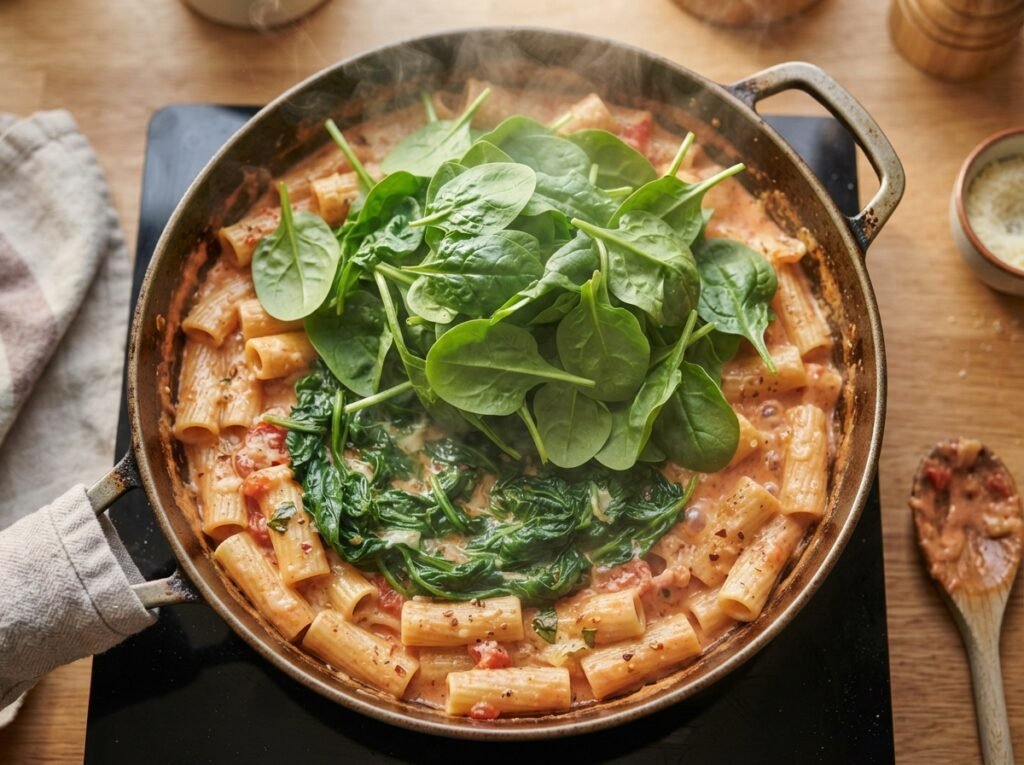
Add the baby spinach and the grated Parmesan and stir until the spinach wilts — <cite index=”119-1″>stir in the spinach and Parmesan until wilted and creamy, then taste and adjust the seasoning.</cite>
At the end. Always at the end. 100g of baby spinach looks like an absurd volume going into the pan and it collapses to almost nothing in about ninety seconds — <cite index=”117-1″>gently stir it into the sauce until it has wilted, two to three minutes.</cite> Add it early and you get grey, slimy strings instead of green leaves.
There’s a second reason, too: spinach is mostly water, and all of that water goes into your sauce. Adding it at the end means it wilts in residual heat and releases less. Adding it early means you’re now cooking a wetter sauce than you planned.
Then serve immediately, with extra Parmesan.
Making It Ahead (Manage Your Expectations)
This is a serve-now dish and I’d be doing you no favours pretending otherwise.
Pasta doesn’t stop absorbing when you stop cooking it, so leftovers will have tightened considerably by tomorrow. That’s fixable: <cite index=”113-1″>gently warm the pasta in a skillet over low heat, adding a splash of vegetable broth or water to loosen the sauce. Microwaving works fine too but can dry it out if you’re not careful — stir halfway so it warms evenly and stays creamy.</cite>
Freezing is a bad idea. <cite index=”113-1″>It freezes okay, but the texture changes, especially the spinach — only freeze if you’re reheating for casual meals where texture isn’t critical.</cite> Between the cream and the spinach you’re freezing the two most fragile things in the pan. Don’t.
Who This Doesn’t Work For
- You want it light. 250ml of cream and a fistful of Parmesan. It’s a comfort pasta.
- You’re dairy-free. Oat cream works — it’s what several versions of this dish use — and you’d drop the Parmesan or swap it. It’s a genuinely good adaptation, not a compromise.
- You want to walk away from the pan. You can’t. Unstirred one-pot pasta welds itself to the base.
- You want leftovers to be as good. They won’t be. They’ll be fine, loosened with broth. Fine is not the same.
- You’re cooking for one. It halves badly — a small pan of one-pot pasta scorches fast. Make it for three and eat it twice, knowingly.
Troubleshooting
“It tastes flat.” Raw onion, or tomatoes that never got a chance to break down, or you seasoned at the end. Almost always the onion.
“The pasta stuck together in a lump.” You didn’t break the nests up. Tongs, around three minutes in.
“It burnt on the bottom.” Not stirred enough. Every two to three minutes, into the corners.
“It went claggy and dry.” The pasta drank more than the recipe allowed for. Splash of hot broth, off the heat.
“The spinach was grey and slimy.” In too early. It needs ninety seconds, not fifteen minutes.
“The sauce went grainy.” Cream met hot acid. Off the heat next time.
The Verdict
This is a good weeknight dinner and the version circulating is honestly fine. The ratio works, the double tomato is smarter than the cherry-tomatoes-only orthodoxy, and thirty minutes for one pan is a fair deal.
It just hands you a method built for filming. Every raw ingredient laid out prettily and drowned in cream photographs beautifully and cooks adequately.
Soften the onion. Burst the tomatoes. Break the nests. Stir it. Spinach last, cream off the heat.
Ninety extra seconds, one extra pan-scrape, and it stops tasting like a video.
7. FAQ
Can you cook pasta directly in the sauce?
Yes, and it’s the point of a one-pot pasta. The starch the pasta releases dissolves into the cooking liquid and thickens it into a sauce, so nothing needs draining and none of that starch is lost. It does mean the pasta absorbs liquid as it goes, so top up with broth or water if it tightens before the pasta is tender.
Should you cook the onion first in a one-pan pasta?
Yes, despite what the viral layered method shows. Simmering an onion in liquid is not the same as frying it — softening it in hot oil first for three to four minutes releases its sugars and builds a savoury base. The same applies to garlic and tomato purée, which tastes tinny until heat converts it. It takes ninety seconds and it’s the biggest flavour difference in the dish.
When should you add spinach to pasta?
At the very end, off or nearly off the heat. Baby spinach wilts in ninety seconds to two minutes and collapses to a fraction of its volume. Adding it early gives you grey, slimy strings, and since spinach is mostly water, it also releases far more liquid into your sauce than you planned for.
How long does tagliatelle take in a one pot pasta?
Around 12 to 15 minutes at a steady simmer, stirring every couple of minutes. Break the nests apart with tongs once they’ve softened enough to move, around three minutes in — left whole they cook into a solid disc with a raw centre. Add a splash more broth if it thickens before the pasta is tender.
When do you add cream to a tomato pasta?
At the end, off the heat. Cream is held together by proteins that can curdle when they meet hot acid, and tomato is acidic. In practice higher-fat cream is fairly robust and a broth-diluted sauce is lower risk, so it often survives being added early — but a split sauce can’t be recovered and taking the pan off the heat costs nothing.
Can you make one pot creamy tomato spinach pasta ahead?
Not really. Pasta keeps absorbing after cooking, so leftovers tighten overnight. They reheat acceptably in a skillet over low heat with a splash of broth to loosen the sauce. Freezing isn’t recommended — the cream and the spinach are both fragile and the texture suffers.