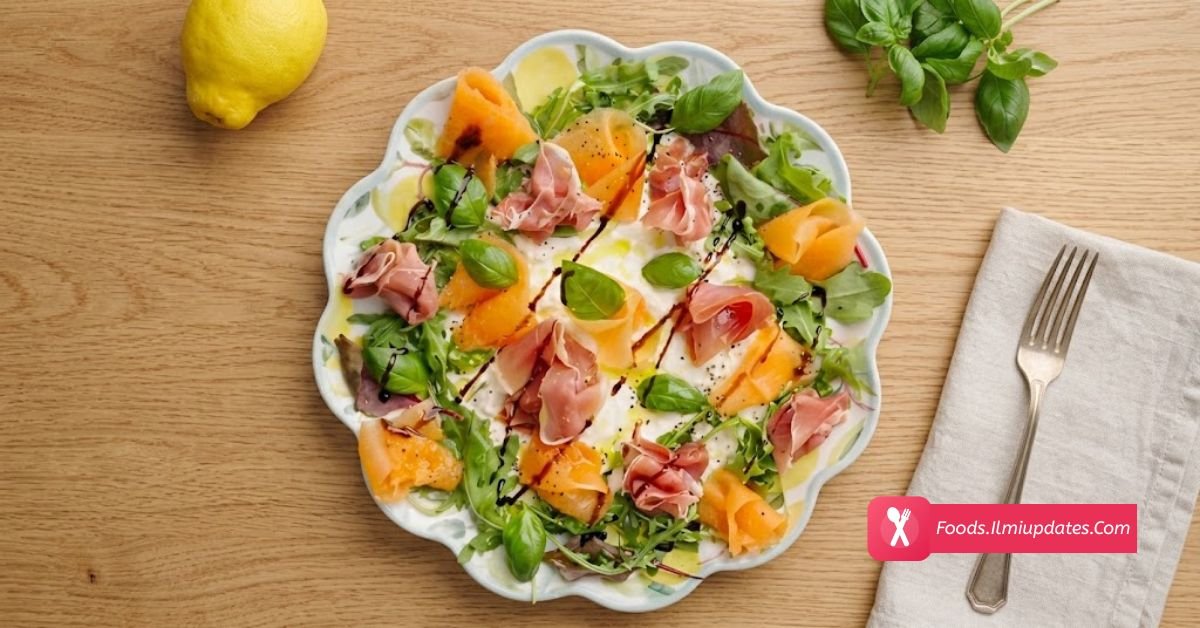
This 15-Minute Melon Burrata Carpaccio Is the Easiest Starter You’ll Make All Summer
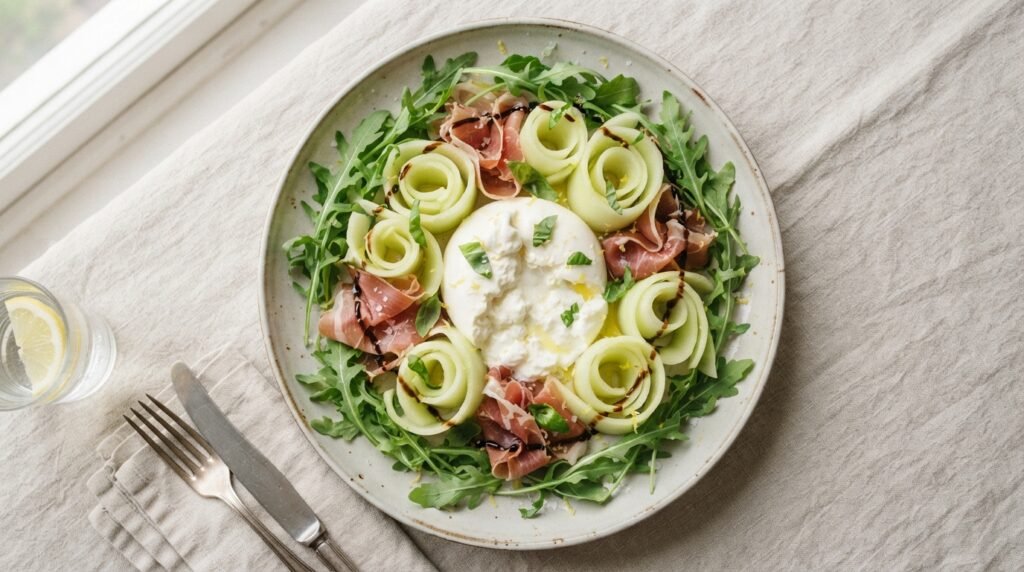
Some of the best summer food isn’t cooked at all. It’s assembled. This melon burrata carpaccio takes about fifteen minutes, uses one pan (none, actually), and still lands on the table looking like something you’d pay for in a courtyard restaurant in Puglia. Ripe honeydew shaved into ribbons, a torn ball of burrata, a little cured ham, rocket, basil, balsamic, lemon zest. That’s the whole thing.
What is melon burrata carpaccio? It’s a no-cook Italian-style appetizer where ripe melon is shaved into paper-thin ribbons — carpaccio-style — and served over torn burrata with olive oil, balsamic glaze, herbs and lemon zest. Cured ham is optional. It takes about 15 minutes, needs no cooking, and serves 2 as a starter. The sweetness of the melon plays against the salty ham and the cream inside the burrata.
That block is the short version. The rest of this piece is the part most recipes skip: how to get the ribbons right, how to keep the plate from turning into a puddle, and what to serve instead of pork.
Why this combination works
There is nothing new about melon and cured ham — in Italy, prosciutto e melone is one of the oldest summer plates there is, wedges of melon wrapped in ham and eaten with your hands. Half Baked Harvest points out that the salty-sweet pairing is so common in Italy that it’s practically a default. What changes here is the format. Instead of chunks, you shave the melon. Instead of mozzarella, you use burrata.
Both of those swaps matter more than they sound.
Shaving the melon does two things. It multiplies the surface area, so the olive oil, balsamic and salt actually coat the fruit instead of sliding off a wet cube. And it changes the texture completely — a ribbon collapses on the tongue, a cube doesn’t. Thin is the entire point of a carpaccio.
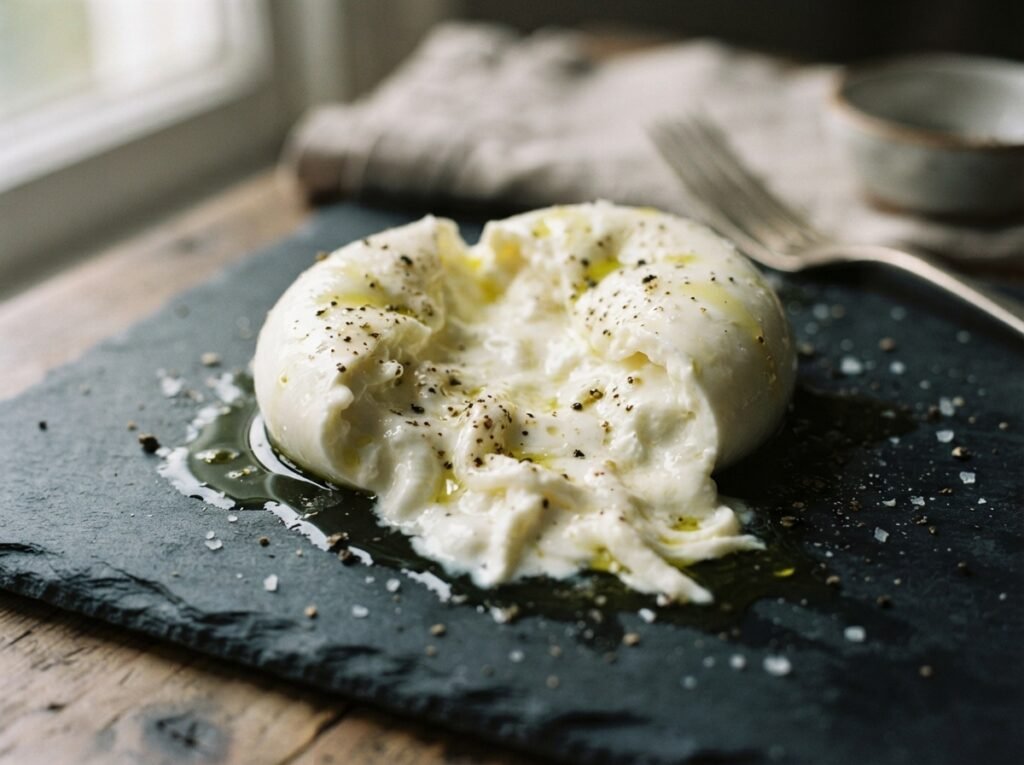
Burrata does the rest. From the outside it looks like mozzarella; cut it and the inside is stracciatella — shredded curd soaked in cream. The name comes from burro, Italian for butter, which tells you what you’re getting. It is the fat and the cream that carry the melon. Regular mozzarella will work and it will be fine, but it won’t be the same dish.
Ingredients (serves 2 as a starter)
- 1–2 balls burrata (about 125 g each), at room temperature
- ½ ripe honeydew melon (or cantaloupe)
- 4–6 slices serrano ham or prosciutto — optional, see swaps below
- 1 large handful rocket (arugula)
- Fresh basil, a small handful
- 2 tbsp good extra virgin olive oil
- 1 tbsp balsamic glaze (the thick crema, not thin vinegar)
- Zest of ½ unwaxed lemon
- Flaky sea salt
- Freshly cracked black pepper
That’s it. Nine things, and four of them are seasoning. Which means every single ingredient is exposed — there’s nowhere to hide a bad melon or a cheap oil. Spend your money on the burrata and the melon; the rest is pantry.
Choosing the melon (this is 80% of the dish)
An underripe melon will ruin this and no amount of balsamic will fix it. Gardener’s Supply notes that honeydews don’t slip from the vine or throw off a strong scent when ripe, which makes them genuinely harder to judge than cantaloupe. So you check three things:
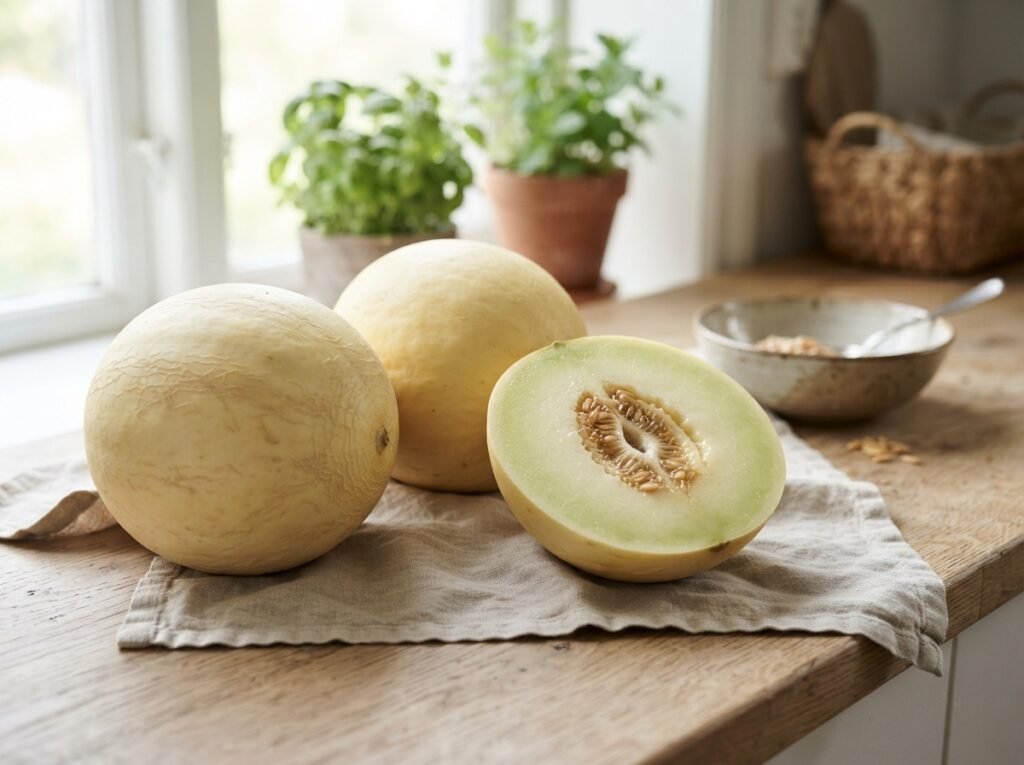
Colour. The rind should be creamy yellow, not green. The Produce Moms are blunt about it — a pale yellow skin with no green patches means the melon is mature. Green means it was picked early, and honeydew doesn’t get sweeter after picking.
Surface. A ripe honeydew’s rind goes smooth and slightly waxy rather than dull and dusty. If it squeaks a little under your palm, that’s a good sign.
The blossom end. Press the end opposite the stem. It should give slightly — springy, not soft, and definitely not mushy. Gardener’s Supply describes exactly this springiness as the honeydew tell.
Weight is the fourth check: a good melon feels heavy for its size, because it’s mostly water. Honeydew is roughly 90% water, which is also why the next section exists.
Cantaloupe works too and is easier to read — it usually detaches from the vine when ripe, leaving a clean dish-shaped scar where the stem was, and it develops a real musky perfume you can smell across a kitchen. If you’re not confident with honeydew, buy cantaloupe. Peak season for both runs roughly June through September.
The technique: ribbons and rosettes
Here’s the part that turns a fruit plate into a carpaccio.
1. Prep the melon. Cut it in half, scoop out the seeds and the stringy fibres with a spoon. Cut off the rind. Now cut the flesh into a couple of flat-sided blocks — a peeler needs something flat to grip.
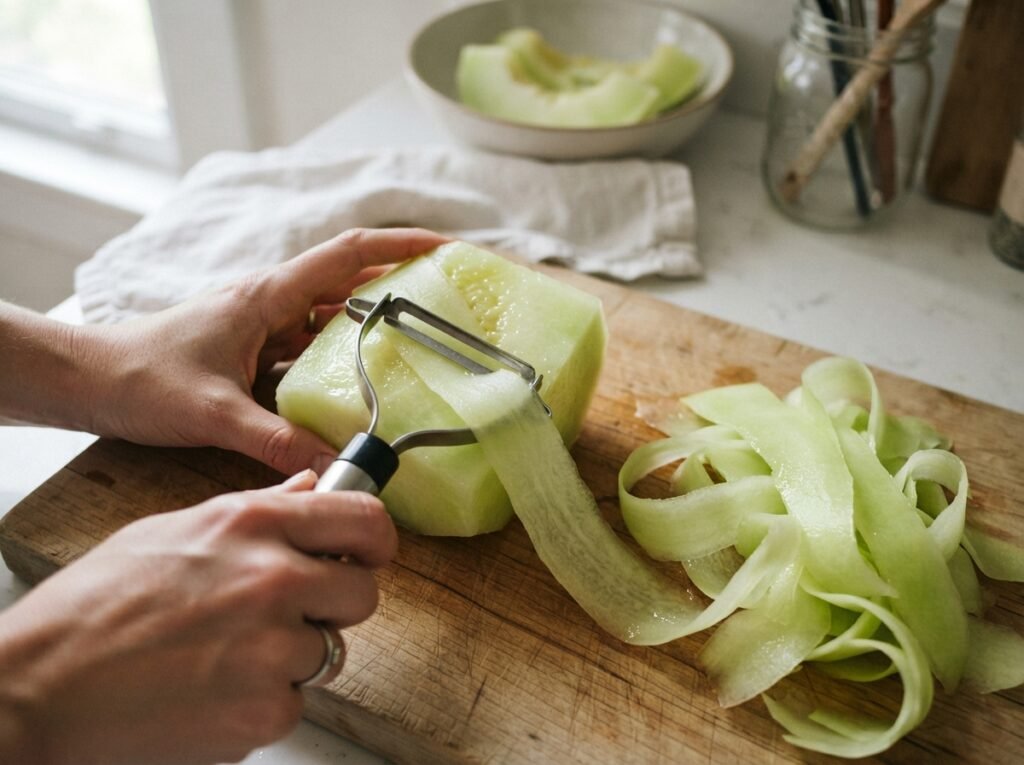
2. Shave. Run a wide vegetable peeler down the length of the block, pressing firmly and evenly. You want long ribbons, roughly 2–3 mm thick. Thinner than that and they tear; thicker and you’ve made slices, not ribbons. A Y-peeler works better than a straight one. A mandoline works too, but a peeler gives you a softer, wavier edge that looks handmade — which is the look you want.
Practical note: the first two or three ribbons will be a mess. Eat them. Nobody’s watching.
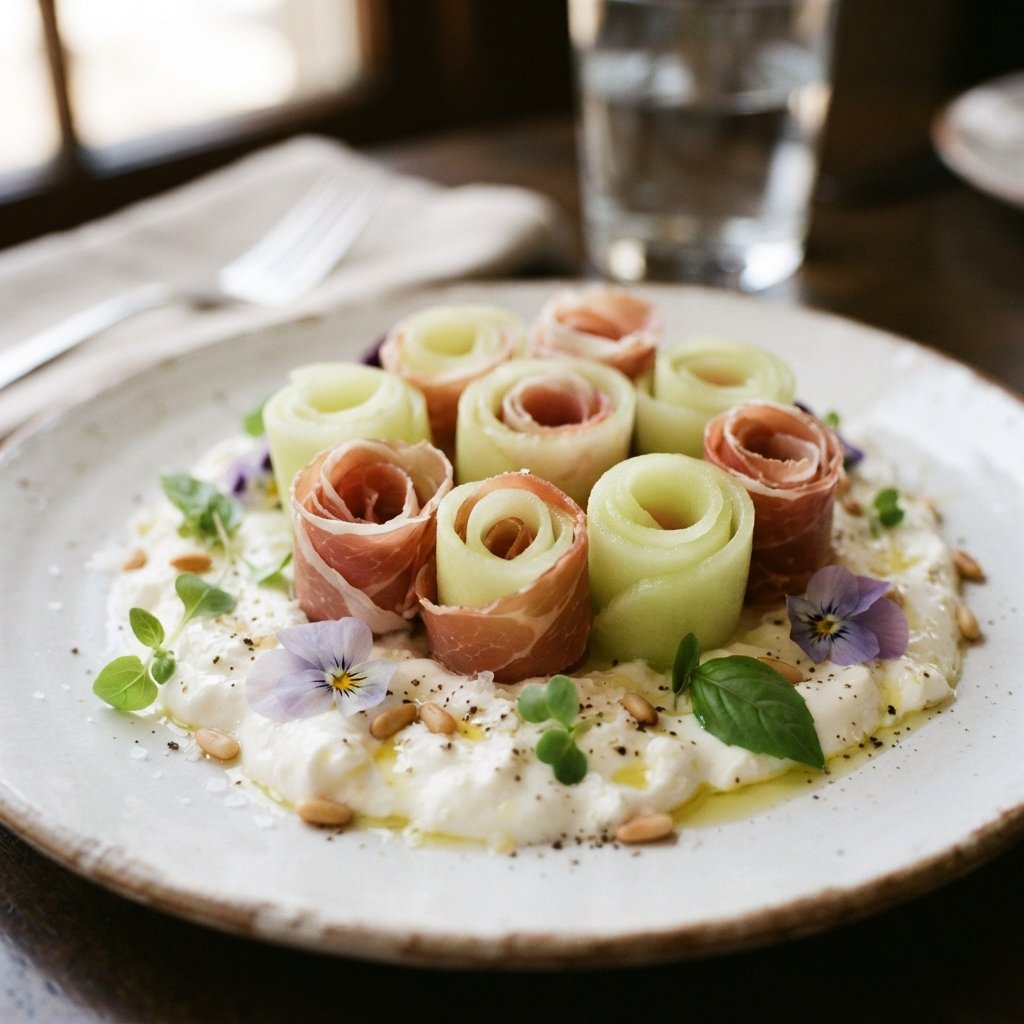
3. Roll the rosettes. Take a ribbon of melon and a torn piece of ham, lay them roughly together, and roll them loosely from one end into a small spiral. Stand it on the plate cut-side up and it opens like a rose. Loose is important — roll it tight and it reads as a pinwheel, not a flower. Make them in slightly different sizes; identical ones look manufactured.
4. Build the plate. Tear the burrata open in the middle of a wide, shallow plate and spread it just enough to make a base — don’t mash it, you want the cream to pool, not disappear. Arrange the rosettes over and around it. Rocket goes around the outside edge, which frames the whole thing and gives you the green.
5. Finish, in this order. Olive oil first. Balsamic glaze second, in thin lines rather than a flood. Then flaky salt, cracked pepper, lemon zest over the top, and basil leaves torn by hand at the very last second. Zest last matters — the oils sit on the surface where you can smell them, and that citrus lift is what stops the dish from tasting flat and rich.
The soggy-plate problem nobody warns you about
Melon is water. Salt pulls water out. Put them together five minutes too early and you get a pale grey puddle under your burrata, and there is no undoing it.
So: salt at the table, not in the kitchen. Everything else can be staged. You can shave the ribbons up to two hours ahead and keep them flat between sheets of kitchen paper in a covered container in the fridge — the paper wicks off the surface moisture. You can wash and dry the rocket. You can have the plates out.
But the ham, the burrata, the oil, the balsamic and the salt all go on within a minute or two of serving. Caroline Chambers makes the same point about prosciutto specifically — layer it in early and it goes limp and sad against the wet fruit.
Two more small things:
- Take the burrata out of the fridge 20–30 minutes before serving. Cold burrata is rubbery and tastes of almost nothing. At room temperature the cream loosens and the flavour actually shows up. (Don’t leave it sitting out longer than that — see the safety note below.)
- Pat the melon ribbons dry with kitchen paper right before plating if they’ve been sitting. One pass. It makes a visible difference to how the oil clings.
Serrano or prosciutto — does it matter?
Yes, a bit, and it’s the kind of detail worth knowing before you’re standing at the deli counter.
Both are dry-cured raw hams from the hind leg of a pig, both preserved with salt, air and time. The differences come from where and how long. Serrano is aged in dry mountain drying sheds — secaderos — typically for around 12 to 18 months, which leaves it denser, drier, darker and more assertively salty. Prosciutto is cured in more humid, controlled conditions and is often protected by origin rules, giving a softer, sweeter, silkier slice; Mashed notes that prosciutto is coated in salted lard before its final curing phase to stop it drying out, which is a big part of why it stays creamy where serrano stays concentrated.
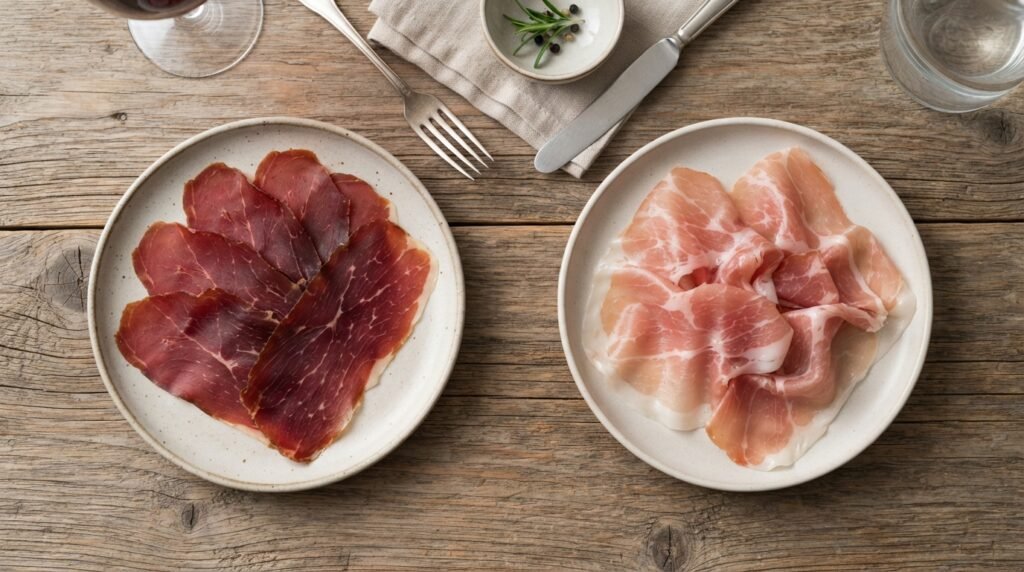
For rolling into rosettes, prosciutto is the more cooperative slice — it’s softer and folds without cracking. For flavour punch against a very sweet melon, serrano wins. The original German version of this dish calls for serrano, and it’s a good call: honeydew is sweet, and serrano pushes back harder.
Either way, ask for it sliced paper-thin. Thick cured ham on this plate is a texture problem.
Pork-free and vegetarian versions
The ham is a garnish here, not a foundation — the dish holds up completely without it, and there are good swaps.
Beef bresaola. Air-dried salted beef, sliced thin, deep red, mineral and lean. Closest in spirit to the original: still cured, still salty, still rolls into a rosette. Halal versions are widely available.
Smoked turkey or beef. Easier to find, milder. Because it’s less salty than serrano, add a little extra flaky salt at the end to compensate.
Fully vegetarian. Skip the meat and replace the salt-and-crunch element with toasted pine nuts or crushed pistachios, plus a few thin radish batons. You lose the cured depth but gain a cleaner, greener plate — and honestly, with a genuinely good melon, it doesn’t need rescuing.
Cucumber ribbons. Shave cucumber alongside the melon, alternating the two. Cuts the sweetness and adds a cool, snappy note.
A note on the burrata itself
Burrata is a fresh, unaged, high-moisture cheese, which means two practical things.
First, buy it close to when you’ll eat it. It doesn’t improve with time in the fridge — it’s at its best within days of production.
Second, if you’re pregnant, check the label. Guidance from the FDA, CDC and ACOG comes down to the same rule: soft cheeses made with pasteurized milk, kept properly refrigerated and eaten fresh, are considered safe, while unpasteurized soft cheeses carry a Listeria risk and should be avoided. Most supermarket burrata in the US, UK and EU is made with pasteurized milk and says so on the pack. If you’re buying from a market stall or a small cheesemonger and nobody can tell you for certain, skip it and use a labelled pasteurized mozzarella instead. If you have specific health concerns, ask your doctor rather than a recipe blog.
What to serve with it
Warm, crusty bread — non-negotiable, because there will be cream and balsamic left on the plate and leaving it there is a crime. Grilled sourdough, focaccia, or a baguette.
As a starter it feeds two generously or four as part of a bigger antipasti spread. Push it into a light lunch by adding more rocket and a second burrata. It sits well before grilled fish, roast chicken, or a simple pasta.
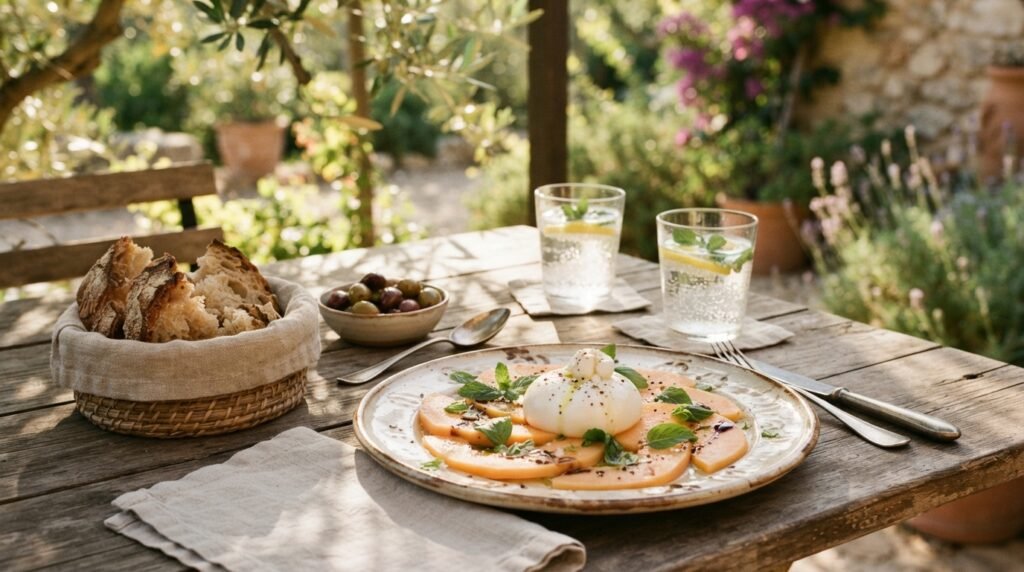
To drink: something cold and not too heavy. A crisp white — Vermentino or Sauvignon Blanc — or, non-alcoholic, sparkling water with a lot of lemon, or a mint lemonade.
Key Takeaways
- 15 minutes, zero cooking. 10 minutes prep, 5 to plate.
- The melon decides everything. Creamy-yellow rind, smooth and waxy surface, slight give at the blossom end, heavy for its size.
- 2–3 mm ribbons with a Y-peeler — thinner tears, thicker isn’t carpaccio.
- Salt at the very last second. Salt plus melon plus time equals a puddle.
- Room-temperature burrata, out of the fridge 20–30 minutes ahead.
- Zest and basil go on last so the aromatics survive.
- Serrano = saltier and firmer; prosciutto = sweeter and softer. Bresaola, smoked turkey, or toasted nuts if you’re skipping pork.
- Assemble à la minute. Ribbons can be prepped ahead; nothing else can.
7. FAQ
Can I make melon burrata carpaccio ahead of time?
Only partly. Shave the melon ribbons up to two hours ahead and store them flat between sheets of kitchen paper in a sealed container in the fridge. Everything else — burrata, ham, oil, balsamic, salt — goes on within a minute or two of serving, or the melon releases water and the plate turns soggy.
What melon is best for burrata carpaccio?
Honeydew is the classic choice — mild, floral, and pale enough to look striking against the white burrata. Cantaloupe is sweeter and much easier to judge for ripeness. Watermelon works but is far wetter, so pat it dry and serve immediately.
Can I use mozzarella instead of burrata?
Yes. Fresh mozzarella is a fine substitute and the dish still works. You’ll lose the creamy stracciatella centre that makes burrata what it is, so add an extra drizzle of good olive oil to compensate for the missing richness.
Is burrata safe during pregnancy?
Public health guidance from the FDA, CDC and ACOG is consistent: pasteurized soft cheese that’s been kept refrigerated and eaten fresh is generally considered safe, while unpasteurized soft cheese should be avoided because of Listeria risk. Check the label for “pasteurized milk.” If the source is unclear, choose a labelled pasteurized alternative and speak to your doctor about your own situation.
How do you slice melon thin enough for carpaccio?
Remove the rind and seeds, cut the flesh into flat-sided blocks, then run a wide Y-shaped vegetable peeler down the length of each block with firm, even pressure. Aim for ribbons around 2–3 mm thick. A mandoline also works, but a peeler gives a softer edge.
What can I use instead of serrano ham?
Prosciutto is the closest substitute and rolls more easily. For a pork-free version, use beef bresaola, smoked turkey, or leave the meat out entirely and add toasted pine nuts or pistachios plus thin radish batons for salt and crunch.