
Spicy Marinated Mozzarella in a Jar — And the One Storage Rule Most Recipes Skip
Some recipes don’t survive contact with a scale. Marinated mozzarella is one of them. You are not baking a cake here — you are drowning cheese in good olive oil, garlic, chili and herbs, and then walking away while the fridge does the actual work. There is no gram that decides whether this is good. Your tongue decides.
But there is one number that genuinely matters, and almost nobody publishes it: how long fresh garlic is safe to sit in oil. We’ll get there.
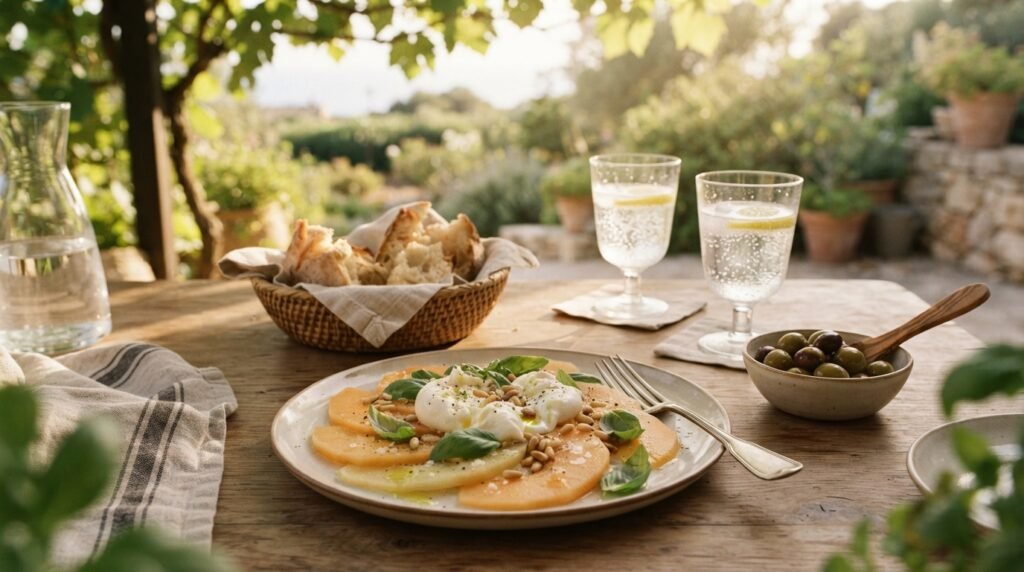
What is marinated mozzarella?
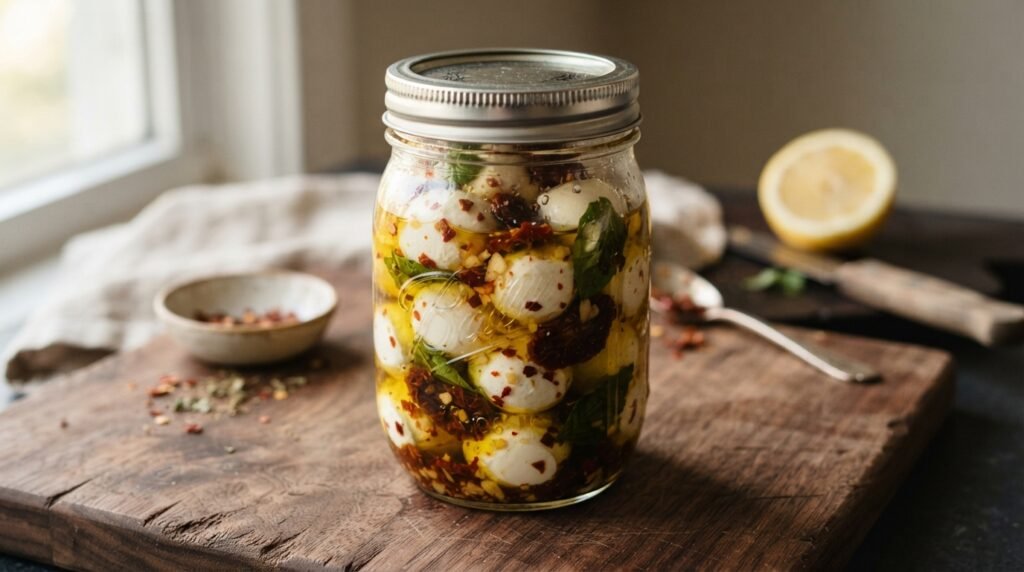
Marinated mozzarella is fresh mozzarella — usually small balls, or a block cut into cubes — packed into a jar with olive oil, an acid such as lemon juice, garlic, herbs and chili, then chilled so the flavours soak in. It takes about ten minutes of hands-on work, needs a few hours minimum in the fridge, and is served at room temperature.
That block above is the short answer. The rest of this article is the part that decides whether yours tastes like a restaurant antipasto or like cold cheese sitting in oil.
Why this version is different
Most marinated mozzarella recipes online are variations on the same list: oil, herbs, garlic, refrigerate, serve. They work. But they treat the marinade as decoration.
It isn’t. The marinade is doing three separate jobs at once:
- Flavour transfer. Oil is a solvent for the fat-soluble aromatics in garlic, chili and rosemary. It pulls them out and carries them into the cheese.
- Structure. Acid keeps the mozzarella firm instead of letting it go slack and slimy in the oil.
- Preservation window. The combination of fresh ingredients and oil creates a specific storage situation with a specific time limit.
Once you understand those three jobs, you stop needing a recipe. You start adjusting like a cook.
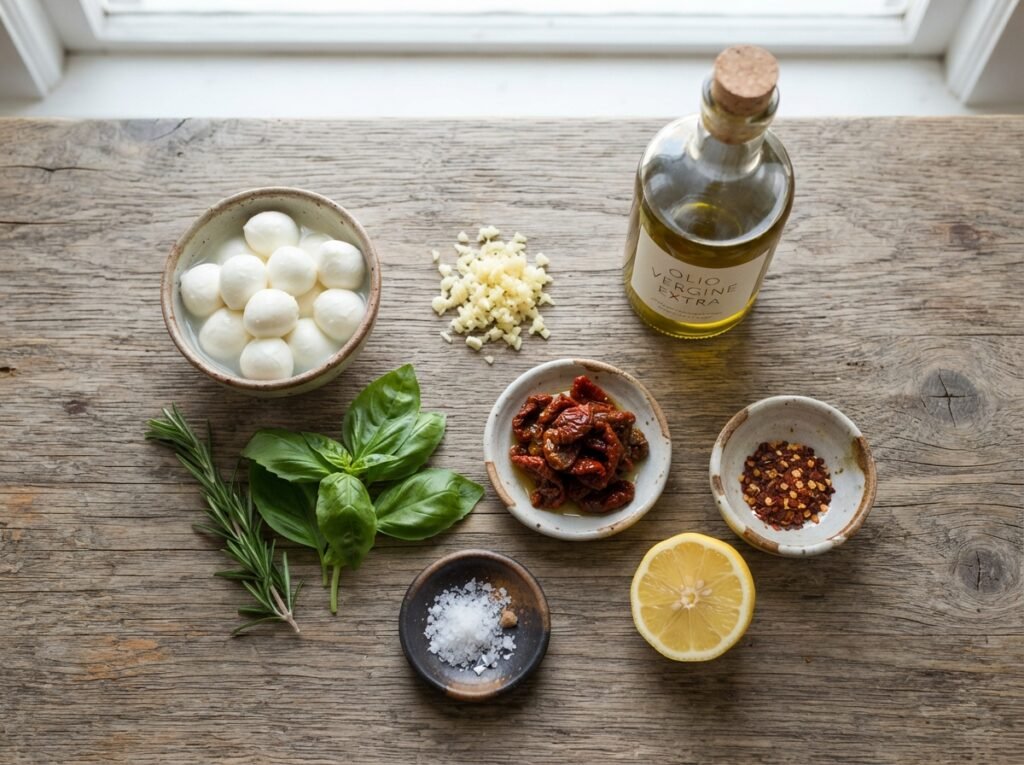
Ingredients (and what each one is actually for)
- Fresh mozzarella balls — ciliegine (cherry-sized) are ideal because they’re a single bite. Bocconcini work too. A block of low-moisture mozzarella cut into cubes also works and keeps longer, though it’s chewier and less creamy.
- 5 garlic cloves, finely chopped — the engine of the whole jar. Also the ingredient with the safety rule attached.
- 5 sun-dried tomatoes, chopped — deep umami and a sweet-sour edge. They rehydrate slightly in the oil and become soft.
- 2 tbsp fresh basil, chopped — add late (see the tip below).
- 1 tsp Italian herb mix
- 1 tsp rosemary, finely chopped — rosemary is aggressive. Chop it small or it dominates.
- 1 tbsp chili flakes — this is the “spicy” in spicy marinated mozzarella. Start with half if you’re unsure.
- Juice of ½ lemon — not optional. This is the structural ingredient.
- Extra virgin olive oil — enough to fully submerge everything.
- Salt, to taste — start with ½ tsp.
- ½ tsp sweetener (sugar, or stevia/erythritol if you’re keeping it low-carb) — you will not taste sweetness. You will taste the chili and the lemon getting rounder.
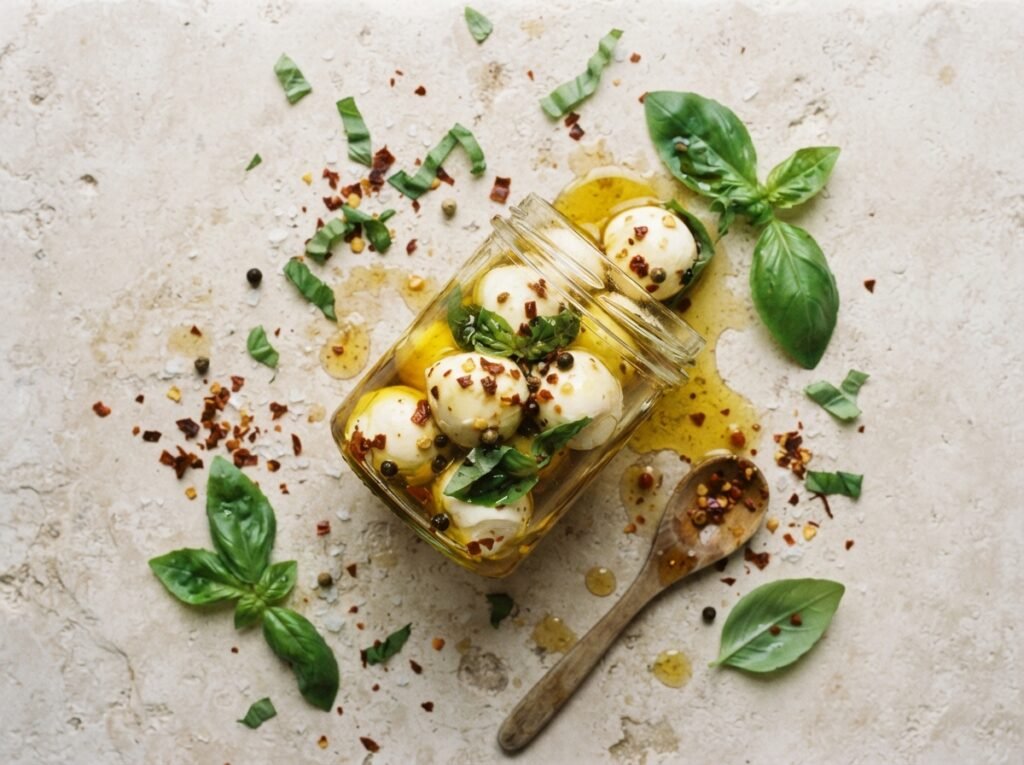
On the mozzarella you choose
Fresh mozzarella packed in whey is creamier and tangier, and it’s what makes this dish feel expensive. The trade-off is a short shelf life. If the ball is very ripe and soft, it will start to fall apart in the marinade — pick one that still has some bounce to it.
Low-moisture block mozzarella is the practical choice if you’re making a big jar for a party a few days out. It stays intact and takes the flavour perfectly well. You just lose some of the milky softness.
Method
Step 1 — Drain and dry. Drain the mozzarella and pat it dry with a paper towel. Water is the enemy of an oil marinade: any whey clinging to the cheese will pool at the bottom of the jar and dilute everything sitting above it.
Step 2 — Build the aromatics first. Put the garlic, sun-dried tomatoes, Italian herbs, rosemary and chili flakes into a clean jar. Doing this before the cheese goes in means the seasonings are distributed instead of sitting in a clump on top.
Step 3 — Add the mozzarella.
Step 4 — Add lemon juice, salt and the sweetener.
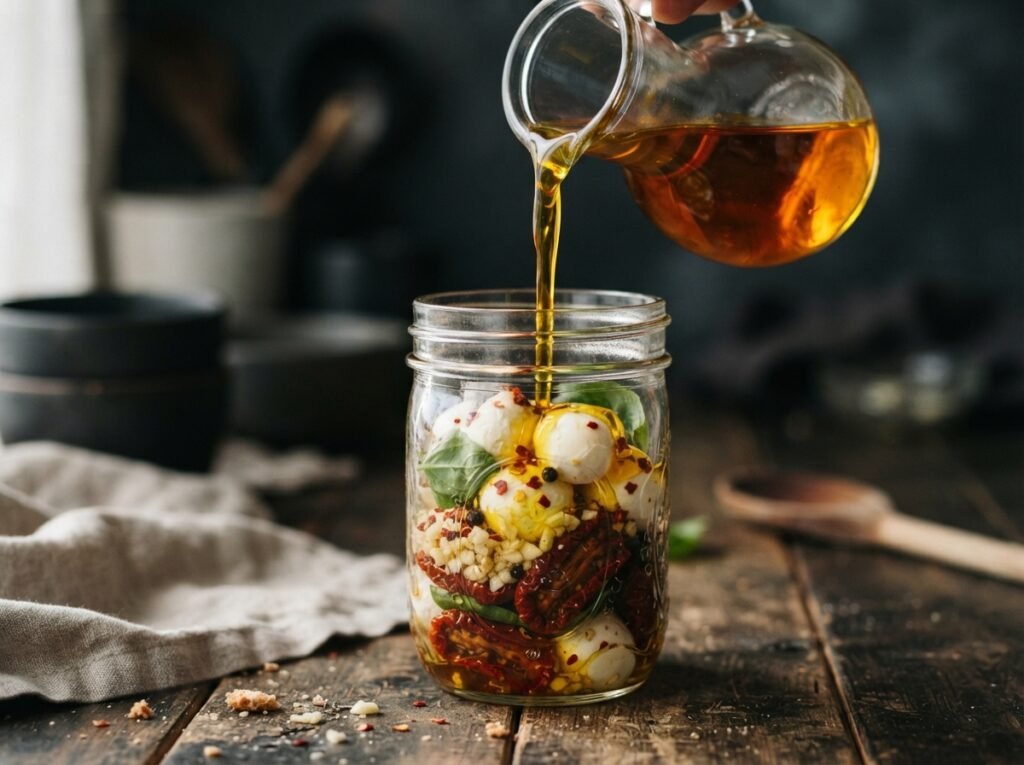
Step 5 — Cover completely with olive oil. Everything must be submerged. Any piece of cheese poking above the oil line will dry out and discolour.
Step 6 — Seal and turn. Close the jar and turn it over gently a few times. Do not shake violently — fresh mozzarella tears.
Step 7 — Refrigerate overnight. Minimum a few hours. Overnight is better. Turn the jar once more if you remember.
Step 8 — Bring to room temperature before serving. This is the step people skip and then wonder why it’s underwhelming. Olive oil solidifies in the fridge and goes cloudy and waxy. Pull the jar out 30–60 minutes before serving and the oil turns liquid again, the aromas lift, and the cheese softens back into something worth eating.
Basil tip: lemon juice oxidises fresh basil over time — the leaves go dark and lose that bright green. If you’re making the jar more than a day ahead, hold the basil back and stir it in just before serving.
The part most recipes leave out: garlic in oil
Here is the thing that almost no marinated mozzarella post explains, and it’s genuinely important.
Fresh garlic carries Clostridium botulinum spores from the soil. Submerge it in oil and you create an oxygen-free, low-acid environment — which is exactly the condition those spores need to produce toxin. This isn’t internet folklore. It’s the reason commercial garlic-in-oil products are legally required to be acidified: <cite index=”18-1″>after a botulism outbreak linked to a low-acid garlic-in-oil product, the FDA required that acidifying agents or microbial inhibitors be added to such products</cite>.
For home cooks, the guidance is specific. <cite index=”13-1″>The USDA states that research at the University of Georgia confirmed garlic-in-oil mixtures held at room temperature are at risk of developing botulism, and that garlic in oil should be made fresh, refrigerated at 40°F (4°C) or below, and kept no more than seven days.</cite> <cite index=”17-1″>The National Center for Home Food Preservation is more conservative still, putting the refrigerated limit at four days, with freezing available for longer storage.</cite> Oregon State University Extension applies the same logic to the other fresh ingredient in this jar: <cite index=”16-1″>dried tomato-in-oil mixtures seasoned with garlic or herbs must be refrigerated and used within four days, or frozen.</cite>
So what does that mean for your jar?
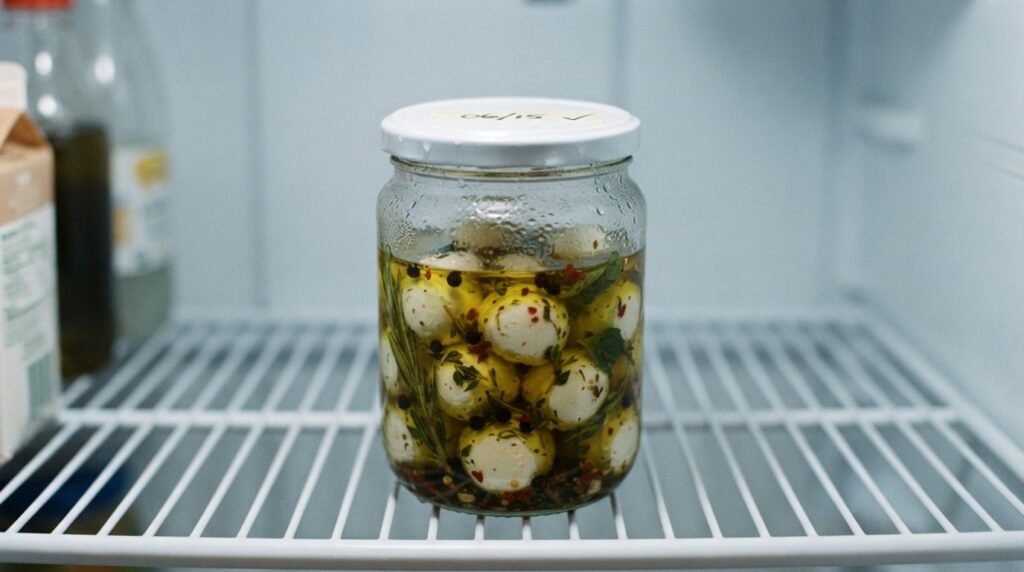
- It lives in the fridge. Always. Not on the counter, not on a shelf “because it’s in oil.” Oil is not a preservative here — it’s the opposite of one.
- Treat four days as your working limit, seven as the outer edge, and lean toward four given there are fresh herbs and rehydrating tomatoes in there too.
- Don’t leave it out for hours at a party and then put it back. Serving it at room temperature for 30–60 minutes is fine. Leaving it out all afternoon and returning it to the fridge is not.
- A “5 days in the fridge” claim you read elsewhere isn’t crazy — it’s just at the loose end of the range and usually assumes less fresh garlic than this recipe uses.
- You cannot see, smell or taste botulinum toxin. There is no home test. If you’ve lost track of when a jar was made, throw it out.
If you want a jar that keeps longer with less to think about, there are two clean routes. Use dried garlic and dried herbs instead of fresh — no water, no growth. Or gently warm the oil with the garlic before assembling, the way The Kitchn’s version does, which is quietly the safest step in that recipe even though it’s presented as a flavour move.
This is general food-safety information based on published USDA and university extension guidance, not medical advice. If you’re preserving food at scale or for sale, follow your local food-safety authority.
Why the lemon juice isn’t optional
Beyond safety, the acid is doing something you can taste.
Mozzarella is a low-acid, high-moisture cheese sitting in a fat. Without an acid in the marinade, the acidity of the cheese and the acidity of its surroundings are mismatched, and the cheese surface degrades — it goes soft, then slimy, then it starts weeping into the oil. Cheesemakers flag this specifically: <cite index=”8-1″>an acid is necessary to keep mozzarella balls from breaking down in the olive oil, because the acidity of the oil needs to be similar to the acidity of the cheese — skip it and you get slimy cheese.</cite>
That’s why “juice of half a lemon” is written as a real ingredient and not a garnish. If you want a brighter jar, add the zest as well as the juice — the zest carries the perfume, the juice carries the sharpness.
Adjusting by taste, not by grams
This is the whole philosophy of the recipe. Make it once at the ratios above, taste it the next day, and then move one dial at a time:
- Flat, not quite alive? More salt. Nine times out of ten it’s salt, not chili.
- Rich but heavy, sits on your tongue? More lemon. Acid cuts fat.
- Warm but not hot? More chili flakes — but give them a day. Chili keeps releasing heat into the oil, so a jar that’s mild at hour three can be genuinely spicy by hour twenty-four. Under-chili on day one.
- Harsh, sharp-edged heat? The sweetener. Half a teaspoon rounds the corners without making anything taste sweet.
- Garlic too raw and pushy? Warm the oil and garlic gently before assembling, or use fewer cloves and add a strip of lemon zest instead.
How to serve it
Straight from the jar with toothpicks is completely legitimate and probably how most of it will get eaten.
Beyond that:
- On a charcuterie or antipasto board with salami, prosciutto, olives and marinated artichokes.
- On crusty bread or bruschetta, with a spoon of the oil dragged over the top.
- Folded into a pasta or tortellini salad — this is the upgrade nobody expects. Plain fresh mozzarella in a cold pasta salad is bland; marinated mozzarella carries the whole dish.
- On a tomato salad, where the marinade doubles as the dressing.
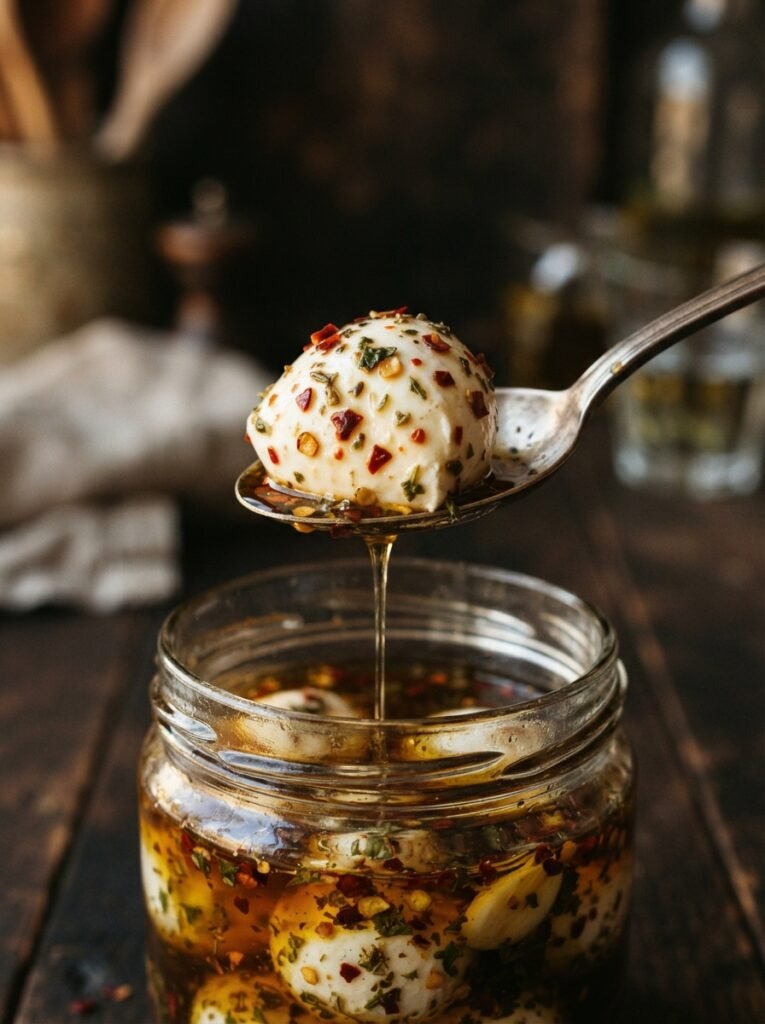
And do not throw away the leftover oil. It’s now a finished garlic-chili-herb oil. Use it on salad, on roasted vegetables, or to start the next thing you cook — within the same fridge window as the jar itself.
Common mistakes
- Not drying the cheese. Water at the bottom of the jar, diluted flavour on top.
- Cheese not fully submerged. Dry, discoloured patches.
- Shaking instead of turning. Torn mozzarella.
- Serving straight from the fridge. Waxy oil, muted flavour, disappointed guests.
- Over-rosemary. It’s the most dominant herb in the jar. Chop it fine, keep it to a teaspoon.
- Storing it on the counter. Covered at length above. Don’t.
- Adding basil on day one for a jar you’ll open on day three. Brown basil.
Key takeaways
- Marinated mozzarella is a ten-minute assembly job — drain, layer, submerge, chill overnight, serve at room temperature.
- Lemon juice is structural, not decorative: without acid, the cheese goes slimy in the oil.
- Fresh garlic in oil must be refrigerated and eaten within roughly four to seven days, per USDA and NCHFP guidance. Never store it at room temperature.
- Chili flakes keep getting hotter for the first 24 hours — under-season the heat on day one.
- Bring the jar to room temperature 30–60 minutes before serving or the olive oil stays solid and the flavour stays flat.
- Taste and adjust: salt for flatness, lemon for heaviness, sweetener for harsh heat.
7. FAQ
How long does marinated mozzarella last in the fridge?
Because it contains fresh garlic in oil, treat four days as your working limit and seven as the absolute outer edge. USDA guidance for garlic-in-oil is a maximum of seven refrigerated days at 40°F or below; the National Center for Home Food Preservation recommends four. Never store it at room temperature.
Can you leave marinated mozzarella out at room temperature?
Only for serving — around 30 to 60 minutes, so the olive oil liquefies and the flavours open up. Storing it at room temperature is unsafe, because fresh garlic submerged in oil creates the oxygen-free, low-acid conditions in which botulinum toxin can develop.
Do I have to add lemon juice?
Yes. The acid keeps the cheese firm — without it, the mismatch in acidity between the mozzarella and the oil makes the cheese break down and turn slimy. It also brightens the flavour and cuts the richness of the oil.
What kind of mozzarella is best for marinating?
Ciliegine (cherry-sized fresh balls) are ideal because they’re one bite. Bocconcini work too. Low-moisture block mozzarella, cut into cubes, is firmer and lasts longer — better for a large jar made ahead, though less creamy.
Why is my marinated mozzarella watery?
The cheese wasn’t drained and patted dry before it went in the jar. Residual whey separates out and sits under the oil, diluting the marinade.
How do I make it spicier without it tasting harsh?
Increase the chili flakes, but give the jar a full 24 hours — heat keeps leaching into the oil. If the heat feels sharp rather than warm, add a half teaspoon of sugar or a sugar substitute; it rounds the edge without adding perceptible sweetness.